Your cart is empty
Tax included and shipping calculated at checkout
Drawer menu
Tax included and shipping calculated at checkout

Last Updated: October 3, 2026
Your pear shape is defined by wider hips than shoulders, with more weight in your lower body. To balance pear shape proportions, you create visual equilibrium by redirecting attention through strategic fabric choices, cuts, and styling. Understanding your proportions lets you shop smarter and find pieces that make you feel confident.
Accurate measurements are the foundation of smart shopping, you'll know what fits before it arrives.
Measure yourself in front of a mirror in minimal clothing, using a soft measuring tape kept snug but not tight.
Here's what to measure:
Write these numbers down and compare them to size charts before buying, since most brands size differently.
Drawing attention upward is the core strategy for balancing pear shape proportions, making the visual weight of your lower half feel less pronounced.
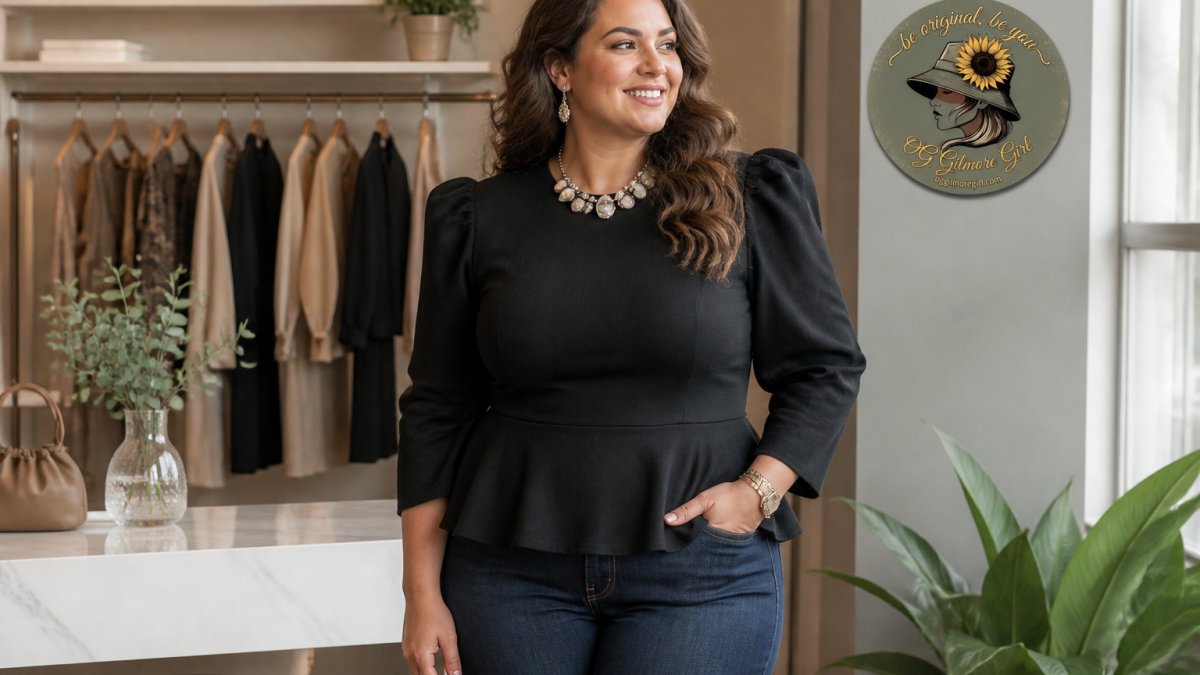
Your neckline is the first thing people see. V-necks create vertical lines that elongate and draw the eye upward. Boat necks and wide necklines make shoulders appear wider for natural balance. Turtlenecks add visual weight to your upper body. Avoid deep U-necks and asymmetrical necklines that draw attention downward.
Statement sleeves (puffed, bell, flutter) add volume to your upper body for balance. Cap sleeves add subtle shoulder definition. Shoulder pads create the illusion of wider shoulders, one of the most effective tricks for balancing pear shape proportions. Avoid sleeveless tops or thin straps, which minimize shoulder definition.
Fit-and-flare dresses cinch at the waist and flow at the hip, creating definition while skimming your lower body. A-line dresses balance proportions without clinging. Wrap dresses define your waist. Shirt dresses give you control to add volume at the chest or cinch at the waist. Avoid straight dresses and bodycon dresses that emphasize hip width.
Your lower body needs skimming, not clinging, to minimize visual weight without hiding your shape.
Fit-and-flare skirts cinch at the waist and flow out, creating the illusion of smaller hips. A-line skirts balance pear shape proportions with a soft, elongated line. Midi skirts in these cuts are especially flattering. Pleated skirts create vertical lines that elongate your lower body.
Tapered pants create a clean, proportional line. Straight-leg pants offer a balanced silhouette without clinging or adding bulk. The KanCan Super Flare from OG Gilmore Girl features a wide flared hem for dramatic volume, 11" rise at your natural waist, and 34" inseam for elongation. The Denim Straight Leg Jeans offer high-waisted fit with ankle taper. Avoid skinny jeans and very wide-leg pants without taper.

Color is one of the most powerful optical tools for balancing pear shape proportions. Lighter colors and warm tones advance visually, while darker colors and cool tones recede. Strategic color placement shifts perceived proportions without changing your silhouette.
Color blocking uses contrasting colors to create visual zones. Place bright or warm colors on top (cream, coral, gold, red) to draw the eye upward, and neutral or cool colors on bottom (black, navy, charcoal) to make hips recede. Example: cream blouse with black pants creates visual anchor at your chest. Avoid the reverse, which emphasizes hip width.
Monochromatic dressing uses a single color or tonal family from neck to toe, creating an unbroken vertical line that elongates your frame and prevents the eye from stopping at your hip line. Examples: all navy, tonal neutrals (cream), or warm monochrome (tan/camel). Stay within the same color family while varying textures and garment types. Works especially well for midi dresses and layered outfits.
Patterned or textured tops draw attention naturally, place them on your upper body to anchor attention there. Solid bottoms in neutral tones (black, navy, gray, tan, olive) create visual calm in your lower half. Avoid patterns on the lower body unless vertical; horizontal stripes and bold patterns draw attention to hip width. Pair textured tops with sleek bottoms for maximum balance.
Tested combinations for pear shapes: Cream blouse + black pants + structured blazer (classic, creates visual lift); Coral top + navy bottoms (warm color draws eyes upward); White tee + camel cardigan + black jeans (cardigan adds shoulder definition); Patterned blouse + solid skirt + belt (pattern at top, belt defines waist); Jewel-tone sweater + gray/black bottoms (saturated color draws attention).
Mistake 1: Matching top and bottom in the same color with a bright accent at hip level creates a horizontal line at your widest point. Keep your bottom neutral and reserve bright accents for your upper body. Mistake 2: All-dark outfits can feel heavy; add texture or a bright accent on top for lift. Mistake 3: Pale pastels flatten your frame; choose saturated pastels and pair with structured tops or belts. Mistake 4: Your skin undertone affects how colors work; test colors before committing, or choose jewel tones (emerald, sapphire, amethyst).
A capsule wardrobe is a curated collection of versatile pieces that work together to create multiple outfits. For pear shapes, it's about intentional choices that guarantee visual balance every time you get dressed, eliminating decision fatigue.
These 10 pieces form the foundation: 1) Fitted white or cream top (neutral anchor); 2) Structured blazer (navy, black, or camel, adds visual weight to upper body); 3) Fitted black pants (high-waisted, straight-leg or tapered); 4) A-line or fit-and-flare dress (cinches waist, flows at hip); 5) Patterned or textured top (draws attention upward); 6) Neutral cardigan (cream, gray, or camel); 7) Dark-wash jeans (high-waisted); 8) Neutral skirt (A-line or fit-and-flare, midi); 9) Neutral belt (defines waist); 10) Structured shoes (neutral, comfortable).
These 10 pieces create a foundation. From here, you add based on your lifestyle and personal style.
Add pieces that reflect your lifestyle: Statement necklace or earrings (one bold piece per outfit); Lightweight sweater (fitted, defines upper body); Second pair of pants (gray or tan); Midi skirt in a second neutral; Patterned dress; Structured jacket in a second color (camel or gray); Lightweight scarf or shawl; Kimonos or open cardigans (adds layering and upper body weight).
Your capsule wardrobe should evolve with your life stage. The core principles stay the same (upper body emphasis, waist definition, neutral bottoms), but the execution changes.
In your 20s-30s: Prioritize versatility; fit-and-flare dresses are your MVP. Build around timeless basics; statement tops and bold colors work well. In your 40s-50s: Invest in quality, well-made pieces. Structured blazers and tailored pants convey professionalism. Use neutral palettes with 2-3 accent colors; waist definition is crucial. In your 60s+: Prioritize comfort with stretchy fabrics and easy-care materials. Midi lengths elongate without feeling too young. Use neutral colors with jewel-tone accents; layering is essential for temperature control.
Your core 10 pieces stay year-round, but you add seasonally:
Spring/Summer:
Fall/Winter:
Step 1: Assess what you already own. Before buying anything, inventory your closet. Do you already have a neutral blazer? Black pants?
Step 2: Prioritize by frequency of use. Buy pieces you'll wear at least twice a week first.
Step 4: Choose quality basics. Your foundation pieces (white top, black pants, blazer) should be well-made and durable. You'll wear them constantly.
Step 5: Mix price points. Invest in basics and outerwear; save money on trendy pieces.
Step 6: Test before committing. If possible, try things on or order from retailers with free returns.
Once you've built your capsule, maintain it:
A pear shape means your hips and thighs are wider than your shoulders, with the bulk of your volume in the lower half. To confirm, measure your shoulder width and hip width at the fullest point. If your hips measure 2 or more inches wider than your shoulders, you likely have a pear silhouette. The key is understanding this hip-to-shoulder ratio so you can balance pear shape proportions strategically through your clothing choices.
Measure your bust at the fullest point, your natural waist (where you naturally bend), and your hips at the widest part. Use a soft measuring tape, keep it snug but not tight, and wear fitted clothing. Record measurements in inches. Compare these numbers to size charts before ordering, this prevents the sizing confusion many shoppers face across different retailers. Knowing your exact measurements helps you choose silhouettes that flatter your pear shape proportions.
Boat necks, off-shoulder styles, and wide necklines draw attention to your shoulders and create visual width in your upper body, balancing wider hips. Statement necklaces and horizontal stripes at the neckline also help accentuate your upper body. These choices help balance pear shape proportions by shifting focus upward.
Yes. Straight-leg and tapered styles work well because they don't add volume to your hips and thighs. The KanCan Super Flare jeans ($16.80) features a high 11-inch rise that hits at your natural waist, creating elongation and a figure-flattering silhouette with its dramatic flare hem that sweeps down. The Denim Straight Leg Jeans ($35.00) offer a high-waisted fit with a slight ankle taper for a streamlined look.


