• Posted on

How Long Do Good Quality Jeans Last? Denim Lifespan Guide

How Long Do Good Quality Jeans Last? Denim Lifespan Guide

Table of Contents

Last Updated: September 21, 2026

How Long Do Good Quality Jeans Last? The Honest Answer

Good quality jeans last three to five years of regular wear, and often longer with proper care. That figure comes down to fabric weight, weave, and how you treat them, not the price tag alone. This guide from OG Gilmore Girl breaks down what actually determines denim lifespan, from fabric composition to washing frequency, so you can shop smarter and keep your favorite pair in rotation for years.

The honest answer depends on what "good quality" means to you. A heavyweight raw denim can outlast a lightweight stretch blend by years, even when both cost the same.

Key Takeaway Denim lifespan is a maintenance story as much as a manufacturing one. Two people can buy identical jeans and get wildly different wear out of them based on washing habits and rotation.

Below, we'll show you exactly how to spot durable denim before you buy, how often to wash it, and when a pair is worth repairing instead of replacing.

Fabric Weight and Denim Weave: The Metrics That Decide Lifespan

Fabric weight is the single biggest predictor of how long jeans hold up. It's measured in ounces per square yard, and it tells you how much cotton is packed into the cloth.

Most mass-market jeans sit between 10 and 12 ounces. Heavyweight denim starts around 14 ounces and climbs from there. The heavier the fabric, the more abrasion resistance it has at stress points like the crotch and knees.

Denim weave matters just as much. A tight, dense weave resists stretching out and thinning better than a loose one. Selvedge denim, woven on slower shuttle looms, tends to produce a denser, more durable fabric with finished edges that resist fraying.

Fabric Weight Typical Use Durability Feel
8-10 oz Lightweight, summer Lower Soft, stretchy
10-12 oz Everyday mainstream Moderate Comfortable
12-14 oz Mid-weight, structured Good Slightly stiff at first
14 oz+ Heavyweight, raw Highest Rigid, breaks in over time

The trade-off is real: heavier denim takes weeks to break in and feels stiff at first. That stiffness is the point. It's the fabric's fiber integrity holding its shape.

Signs of High Quality Denim You Can Spot Before You Buy

Stitching density is the fastest quality check you can run in a fitting room. Look at the inseam and side seams: more stitches per inch means a stronger seam that resists blowing out.

Hardware tells you a lot too. Metal rivets at pocket corners and a solid metal button outlast plastic or thin stamped versions. Reinforced belt loops, bar-tacked at the ends, survive daily tugging far better than single-stitched loops.

A few things to check before you commit:

  • Weight and hand-feel: does the fabric feel substantial or papery?
  • Stitch count: dense, even stitching along all major seams
  • Hardware: metal rivets and buttons, not plastic
  • Pocket bags: thick cotton twill, not thin synthetic lining
  • Stretch content: lower elastane percentages hold shape longer

That last point matters more than most shoppers realize. A 98% cotton, 2% spandex blend keeps its structure far better than a 70/30 stretch mix, which tends to bag out at the knees within months.

How Often Should You Wash Jeans? (Less Than You Think)

Wash jeans every 10 to 15 wears for most people, and spot-clean between washes. Overwashing is the most common way people shorten denim lifespan without realizing it.

Every wash cycle strips indigo, breaks down cotton fibers, and stresses seams. Machine drying does even more damage, shrinking fabric and weakening elasticity. If your jeans smell fine and aren't visibly soiled, they don't need a full wash.

Skinny Fit Jeans →

When you do wash:

  1. Turn jeans inside out to protect the outer surface and indigo
  2. Use cold water on a gentle cycle
  3. Skip harsh detergent and fabric softener
  4. Air dry, always. Heat is the enemy of fiber integrity

For raw denim, the guidance is different. Many raw denim enthusiasts go months between washes to build fading, though this is a stylistic choice rather than a longevity one. Regular washing actually extends the life of raw denim by removing grit that abrades fibers from the inside.

How to Make Jeans Last Longer: A Care and Repair Routine

Building a simple care and repair routine will add years to any pair of jeans. The goal is to reduce abrasion and catch small damage before it becomes a crotch blowout.
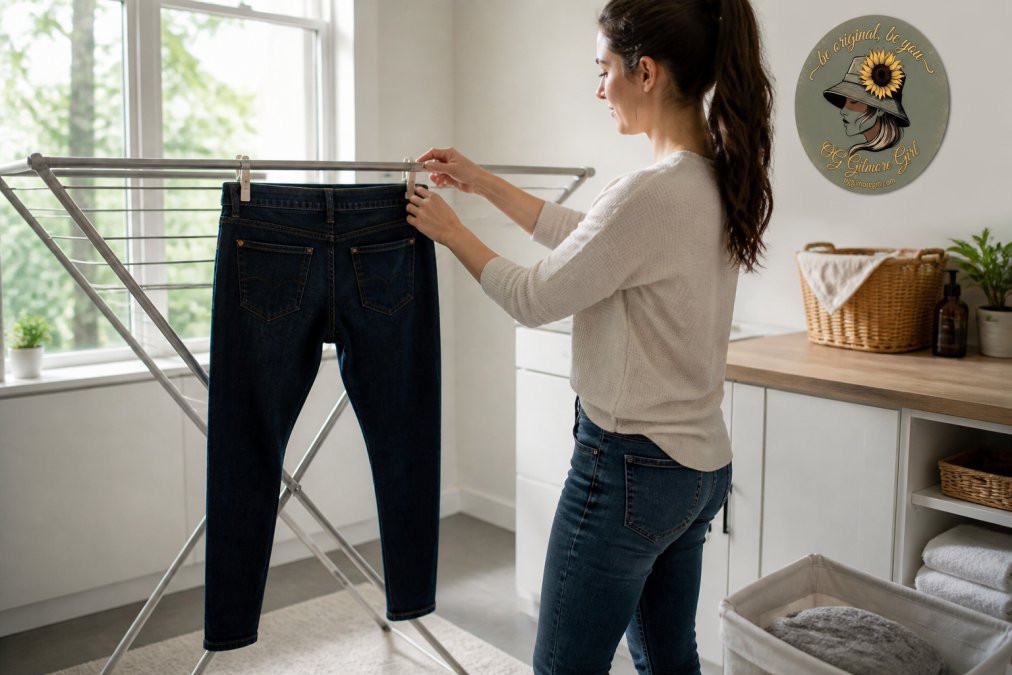
A woman hanging a pair of dark indigo jeans by the waistband on a drying rack in a bright laundry room, air drying instead of using a machine dryer

Start with rotation. Wearing the same pair every day accelerates wear at the same stress points. Give each pair 24 to 48 hours of rest between wears so fibers recover their shape. This is called denim recovery, and it's the cheapest durability trick there is.

Then handle repairs early. A loose seam or a small tear is a five-minute fix. Left alone, it becomes a hole that's much harder to salvage. Darning, where you weave new thread into worn fabric, can extend the life of a favorite pair by months or longer.

  • Rotate at least three pairs through your weekly wardrobe
  • Air out jeans overnight between wears
  • Spot-clean stains immediately with cold water
  • Repair loose seams and small tears as soon as you spot them
  • Store folded or hung by the waistband, never crammed into a drawer
Pro Tip If you're coming from fast fashion denim, expect your first pair of heavyweight or raw jeans to feel uncomfortable for the first week or two. That break-in period is normal, and the payoff is a pair that molds to your body and holds its shape for years.

Raw vs. Washed Denim, Stretch Blends, and What Each Means for Longevity

Raw denim, also called dry denim, is unwashed and untreated after weaving. It's the most durable option because the cotton fibers are still intact and tightly woven, but it requires a real break-in period and a commitment to care.

Washed denim goes through industrial washing before it reaches you. That process softens the fabric and removes some shrinkage, but it also weakens fibers slightly.

Denim Type Elastane Content Primary Failure Mode Typical Shape Retention
Raw / dry (100% cotton) 0% Abrasion at stress points Years
Washed rigid (100% cotton) 0% Abrasion, seam fatigue Years
Low-stretch 1-2% Slow elastane fatigue 2-4 years
Mid-stretch 3-4% Knee bagging, waist sag 1-2 years
High-stretch 5%+ Rapid recovery loss Under 1 year
Key Takeaway If longevity is the priority, look at the fiber content tag before the price tag. A 99% cotton, 1% elastane blend will outlast a 92% cotton, 8% elastane blend every time, regardless of brand or cost.

When to Repair, Retire, or Replace Your Jeans

Repair jeans when the damage is localized: a blown seam, a small tear, or a worn pocket corner. Retire them when the fabric itself has thinned across a wide area, since patches won't hold on fabric that's already giving out.

  1. Turn the jeans inside out and slide a darning mushroom or a smooth jar lid under the damaged area to create a flat, taut surface.
  2. Thread a needle with cotton or polyester-cotton thread matched to the denim color. Polyester thread is stronger but can abrade cotton over time; cotton thread blends better but wears faster.
  3. Run vertical stitches across the hole, about 1/8 inch apart, extending at least 1/2 inch past the damaged area on all sides.
  4. Weave horizontal stitches over and under the vertical ones, creating a grid that mimics the original twill weave.
  5. Knot on the inside and trim. The darned area will be slightly stiffer than the surrounding fabric, which is normal.

A good rule of thumb:

  • Repair: torn seams, small holes, worn hems, loose buttons
  • Retire: widespread thinning, multiple large holes, stretched-out waistband
  • Replace: when repair cost approaches the price of a new pair
Pro Tip Keep a small repair kit in your laundry area: cotton thread in indigo and black, a darning mushroom, a pack of iron-on denim patches, and a seam ripper. Having the tools within reach is the difference between fixing a tear in five minutes and letting it become a blowout.

Frequently Asked Questions

How can you tell if a pair of jeans is high-quality?

Check fabric weight, stitching, and hardware. Heavier denim (12 oz and up) resists abrasion better than lightweight fabric. Look for tight, even stitching at stress points, metal rivets at pocket corners, and a bar-tack at the fly base. Fabric composition matters too: a 98% cotton, 2% spandex blend like the Distressed Ankle Jeans holds shape while staying comfortable. If the denim feels thin or the seams look loose, expect a shorter lifespan.

Does washing jeans frequently shorten their lifespan?

Yes. Every wash cycle exposes cotton fibers to agitation and heat, which breaks down fiber integrity over time. Most denim experts recommend washing jeans every 5 to 10 wears, or when they smell or feel stretched out. Spot-clean small marks between washes, turn jeans inside out, use cold water, and air dry. Cutting wash frequency from weekly to monthly can meaningfully extend how long your jeans last.

How does raw denim compare to pre-washed denim in terms of longevity?

Raw denim skips the factory washing process, so the cotton fibers stay intact and the fabric is denser at the start. That gives raw denim a longer potential lifespan, but it requires more patience: you wash it rarely, expect indigo transfer early on, and break it in over months. Pre-washed denim feels soft immediately and is easier to care for, but the pre-treatment removes some fiber strength. Both can last years with proper care.

What are the signs that it is time to replace your jeans?

Watch for crotch blowout that keeps returning after repairs, thinning fabric you can see light through, broken zippers or missing buttons that no longer hold, and stretch denim that stays bagged out even after washing. Fading alone is not a reason to retire a pair; many people treat indigo fading as a feature. Once structural damage outpaces repair, it is time to replace them.

Leave a comment

Please note, comments must be approved before they are published

Read Also

See all OG Gilmore Girl Gossip
What to Wear With Distressed Denim Shorts
  • Posted on
What to Wear With Distressed Denim Shorts
Style distressed denim shorts for any occasion. Learn outfit formulas, top and shoe pairings, and how to dress them up or down with confidence.
Best Shoes to Wear With Flared Bottom Tops
  • Posted on
Best Shoes to Wear With Flared Bottom Tops
Discover the best shoes to pair with flared bottom tops. From flats to boots, find outfit ideas that balance your silhouette and elevate your style.
How to Price Items for a Clothing Boutique
  • Posted on
How to Price Items for a Clothing Boutique
Learn how to price clothing boutique items using markup formulas, cost calculations, and market research. Step-by-step pricing strategy for retail success.
Benefits of Investing in Boutique Clothing
  • Posted on
Benefits of Investing in Boutique Clothing
Discover the real benefits of investing in boutique clothing, from better quality to lower cost per wear. Learn how to spot well-made pieces that last.
Steps to Take After an Online Shopping Scam
  • Posted on
Steps to Take After an Online Shopping Scam
Got scammed online? Here's exactly what to do: contact your bank, freeze accounts, report fraud, and secure your data. Step-by-step recovery guide.
How to Wash and Care for Loungewear Sets
  • Posted on
How to Wash and Care for Loungewear Sets
Learn how to wash and care for loungewear sets properly. Step-by-step guide to preserve softness, prevent pilling, and extend garment life.
Eco Friendly Loungewear Brands for Women
  • Posted on
Eco Friendly Loungewear Brands for Women
Discover eco friendly loungewear brands for women that prioritize sustainable materials and ethical production. Shop comfortable, stylish options today.
Fashion Trends Out of Style for 2026
  • Posted on
Fashion Trends Out of Style for 2026
Discover which fashion trends are out of style for 2026 and what to wear instead. Update your wardrobe with timeless essentials.
What's Trendy in 2026: Fashion Forecast
  • Posted on
What's Trendy in 2026: Fashion Forecast
Discover what's trendy in 2026: silhouettes, colors, fabrics, and must-have pieces. Style tips for modern looks and sustainable trend adoption.
How to Find Petite Clothing That Fits
  • Posted on
How to Find Petite Clothing That Fits
Find petite clothing that actually fits your frame. Learn measurements, silhouettes, tailoring hacks, and where to shop for proportional designs.
Casual vs Cocktail: What's the Difference?
  • Posted on
Casual vs Cocktail: What's the Difference?
Casual vs cocktail dress codes explained: what to wear to each, key differences, and how to nail wedding guest attire. Get the guide and shop the look.
Quiet Luxury Trend 2026: The Complete Guide
  • Posted on
Quiet Luxury Trend 2026: The Complete Guide
Discover the quiet luxury trend in 2026: timeless style, intentional consumption, and effortless elegance. Learn how to build your curated wardrobe today.
How to Dress Up Loungewear for Work
  • Posted on
How to Dress Up Loungewear for Work
Dress up loungewear for work: Master the art of dressing up loungewear for work. Learn styling tricks, fabric choices, and layering techniques to look.
How to Style Simple Dresses for Beginners
  • Posted on
How to Style Simple Dresses for Beginners
Learn how to style simple dresses for beginners with easy tips on accessories, layering, and capsule wardrobe essentials. Discover effortless looks today.
How to Soften Stiff Raw Denim: 7 Easy Steps
  • Posted on
How to Soften Stiff Raw Denim: 7 Easy Steps
How to soften stiff raw denim: Learn how to soften raw denim without losing fades. Follow our 7-step guide on soaking, washing, and breaking in stiff.
Designer Spring Dress Alternatives for 2026
  • Posted on
Designer Spring Dress Alternatives for 2026
Find spring dress alternatives to expensive designer styles for 2026. Shop affordable boutique picks that match runway trends without the luxury price tag.