Your cart is empty
Tax included and shipping calculated at checkout
Drawer menu
Tax included and shipping calculated at checkout

Last Updated: September 22, 2026
Learning how to mix and match different denim styles starts with three things: two denim pieces in different washes, one non-denim layer, and a mirror check on proportions. That's it. No special tools, no expensive haul.
Here's your quick prep checklist:
At OG Gilmore Girl, we've noticed a common theme: people own plenty of denim, but they often wear each piece alone. The fix isn't buying more. It's learning which combinations work together.
Double denim is the practice of wearing two denim garments in one outfit. The old rule said never do it. The current rule says do it, but vary the wash, weight, or fit so the two pieces don't compete.
Three rules carry most of the weight:
Everything else is preference. The "Canadian Tuxedo" problem was never about wearing denim twice.
The fastest way to style double denim in 2026 is to treat it like any other outfit: pick a base, add contrast, then finish with shoes and accessories that match the mood. Denim is the fabric, not the whole look.
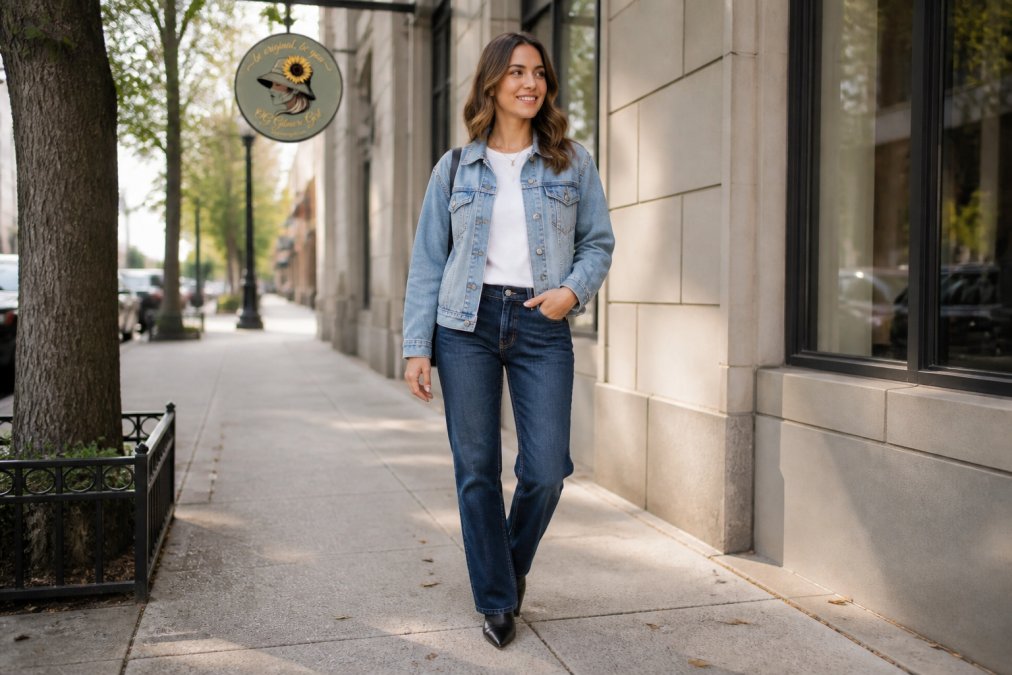
A denim jacket with jeans is the safest entry point. Keep the jacket fitted at the shoulder and slightly cropped at the waist. That waistline break stops the eye from reading your body as one long column of denim.
A denim shirt reads more relaxed than a jacket because it has no structure. Tuck it, knot it, or leave it open over a tank. The trick is to avoid a buttoned-up, head-to-toe look.
Wash pairing is where most outfits succeed or fail. The table below shows combinations that consistently work, and what each one is best for.
| Top Piece | Bottom Piece | Effect | Best For |
|---|---|---|---|
| Light wash | Dark indigo | High contrast, slimming | Evening, smart-casual |
| Dark wash | Light faded | Balanced, relaxed | Weekends, casual wear |
| Medium wash | Medium wash | Tonal, needs a belt | Layered fall looks |
| Black denim | Gray denim | Modern, edgy | Nights out |
| Raw denim | Faded denim | Textural, intentional | Street style |
Light and dark is the easiest contrast to pull off. A light denim shirt over dark jeans gives you definition without effort. Reverse it and you get a softer, more casual feel.
Matching shades can work, but only when the textures differ. A smooth dark jacket over distressed dark jeans reads as intentional. Two smooth, identical pieces read as a uniform.
Texture is the most underused tool in denim styling. Two pieces in the same wash look completely different if one is raw and stiff and the other is soft and faded.
Think in three tiers:
Fit matters more than wash when you're styling denim on denim, because two relaxed pieces at once add visual bulk no wash contrast can fix. The goal is to create one clear vertical line and one clear waist break. How you get there depends on the cuts you're combining, not just your frame.
Start by understanding what each cut does to proportion:
Wide-leg jeans add volume from the hip down. They need a fitted or cropped top piece to avoid a boxy silhouette.

Straight-leg jeans create a clean vertical line. They pair with almost any jacket, including oversized ones.
Skinny jeans taper the leg and read as the most fitted bottom. They balance a loose or boxy jacket.
Mom jeans sit high and taper slightly, which gives a defined waist and a relaxed leg. They work under cropped jackets.
Barrel and balloon jeans add curve through the leg. Keep the top piece close to the body.
Petite frames: a cropped jacket over high-waisted straight or skinny jeans lengthens the leg line. Avoid longline jackets that swallow the waist.
Curvy frames: a fitted top piece over straight or wide-leg jeans defines shape without clinging. Skip two stretchy pieces at once, which can pull and gap.
Tall frames: oversized jackets work, but balance them with a tapered or straight jean so the silhouette doesn't read as one long column.
Straight figures: add a belt and choose a jean with a slight taper or a defined waist to create curve where the body doesn't.
The accessory levers that change formality:
Now apply those levers to three real occasions:
Casual (weekends, errands, coffee): light or medium wash jacket over dark jeans, white sneakers, canvas tote, minimal jewelry. Keep the denim relaxed and the accessories simple.
The biggest mistake is wearing two pieces in the same wash with the same texture. That's the look people mean when they say "Canadian Tuxedo." It flattens your silhouette and hides your shape.
Other mistakes worth avoiding:
Denim care is part of styling. Washes fade, fits stretch out, and colors bleed if you treat every pair the same.
A few habits that keep denim looking sharp:
Yes. The trick is to create contrast in at least one element: wash, weight, or fit. Pair a light wash denim shirt with dark indigo jeans, or combine a structured denim jacket with softer, stretchy denim bottoms. When the washes are too close, the outfit reads as a uniform rather than a styled look. Contrast in shade or texture gives the eye something to separate.
Break up the denim with something that is not denim. A white t-shirt, a leather belt, or a patterned scarf between your denim pieces prevents the Canadian Tuxedo effect. The second rule is contrast: if your top and bottom are the same wash, vary the weight or fit. Together, these two habits make denim-on-denim look intentional rather than accidental.
Anchor the outfit with one dominant wash and use the other as an accent. For example, wear dark indigo jeans as your base and layer a faded light wash denim jacket on top. The reverse works too. Avoid splitting the outfit 50/50 with no clear anchor, because the eye needs a focal point. Distressed or raw denim pieces also add visual separation between light and dark shades.
Absolutely, and it is one of the best ways to add depth to a denim-on-denim outfit. Combine a heavy raw denim jacket with lighter stretch jeans, or pair a soft chambray button-up with structured denim bottoms. The texture difference creates visual interest and keeps the look from feeling flat. Just keep the color palette coordinated so the outfit still reads as one cohesive look.


