• Posted on

How to Measure Yourself for Formal Dresses

How to Measure Yourself for Formal Dresses

Table of Contents

Last Updated: October 20, 2026

What You'll Need Before You Start

To get started learning how to measure yourself for formal dresses, begin with a flexible measuring tape, not a rigid ruler, flexible tapes bend around your curves for precise numbers.

Wear a fitted bra and lightweight underwear. Avoid shapewear, padded bras, or thick layers, which add bulk that throws off your numbers.

Stand in front of a mirror to keep the tape level, and have a notebook or phone ready to record each number immediately.

Pro Tip Measure yourself in the morning before eating. Your body can swell slightly throughout the day, especially around the waist and hips. Morning measurements give you the most accurate baseline.

How to Measure Bust for a Dress

Measure around the fullest part of your bust, typically at your nipple line, with the tape snug but not tight.
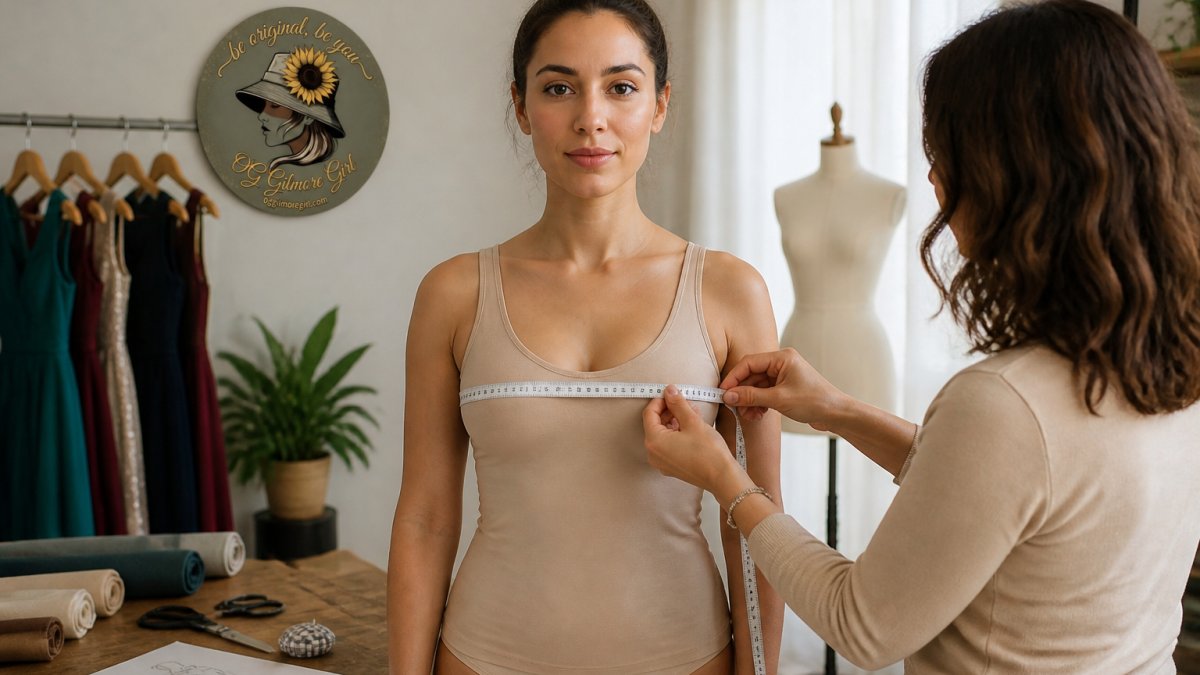
Woman standing with a measuring tape around the fullest part of her bust to ensure an accurate fit

Keep the tape level all the way around, check your mirror to confirm it runs parallel to the ground on both sides.

Stand straight with arms relaxed, breathe normally, and don't compress your chest. The tape should feel snug but leave room for one finger underneath.

Watch Out The biggest mistake here is wrapping the tape too tight. A tight measurement makes you order a size too large, and the dress will hang loose everywhere. Measure snug, not compressed.

How to Measure Waist for a Dress

Find your natural waist, the narrowest part of your torso, usually just above your hip bones and often higher than you think.

Wrap the tape around your natural waist, level and parallel to the ground, without digging in, one finger should fit underneath easily.

Stand straight and relax your core, don't hold your stomach in or push it out.

Many formal styles have fitted waists, so an off measurement means the dress either cinches uncomfortably or hangs shapeless.

How to Measure Hips for a Dress

Measure around the fullest part of your hips, about 7-9 inches below your natural waist for most people.

Stand with feet together and wrap the tape around the fullest part of your hips, level and parallel to the ground, snug but not tight, one finger should slip underneath.

Keep arms at your sides and stand straight, don't twist or lean. Check the mirror to confirm the tape isn't riding higher in the back.

This is especially important for fitted skirts and mermaid silhouettes that follow your hip curves.

Key Takeaway Bust, waist, and hips are the three core measurements every formal dress size chart uses. Get these three right, and most sizing issues disappear.

Taking Additional Measurements for Formal Dresses

Bust, waist, and hips get you into the right size range. The measurements below decide whether a specific formal dress will actually fit, take them for floor-length gowns, fitted silhouettes, or custom dresses.

Which extra measurements matter for which silhouette

Match the silhouette to the numbers that drive the fit:

  • Ball gown and A-line: hollow-to-hem and bust matter most. The skirt has room, so length and bodice fit decide whether the dress works.
  • Mermaid and trumpet: hips, waist, and hollow-to-hem. The skirt is fitted to the knee, so the hip measurement is the hard limit and the hem must be right for your heel height.
  • Sheath and column: bust, waist, hips, and hollow-to-hem. These styles follow the body closely, so all four numbers need to be accurate.

How to take each one

Shoulder width. Measure from the tip of one shoulder bone to the other across the back, tape level.

Torso length. Measure from the base of your neck straight down the center front to your natural waist.

Underbust. Measure snugly around your ribcage directly under your bust. This is the measurement that sets empire-waist seams and many corset-style bodices.

Sleeve length (when the dress has sleeves). Measure from the tip of the shoulder to the wrist bone with your arm slightly bent.

Troubleshooting inconsistent readings

If two attempts give different numbers, the cause is usually:

Find Your Style →

  • A tilted tape. Keep it parallel to the floor; check the back in a mirror, where tilting is easiest to miss.
  • Measuring alone. If you must, use a mirror, measure twice, and record both numbers. If they differ by more than about half an inch, take a third.
  • Changing posture. Stand straight with arms relaxed and breathe normally, don't hold your stomach in or measure sitting or bending.

Accuracy check: measure your bust, waist, and hips twice, a few minutes apart. Numbers within about half an inch are reliable; bigger swings mean something in your setup changed, so fix the tape or posture and remeasure before ordering.

Fit ease, alterations, and what measurements cannot predict

Measurements describe your body, not the dress. They cannot tell you:

  • How the fabric behaves. Stretch fabrics forgive a close fit; structured fabrics like satin, crepe, and taffeta do not.
  • How much ease the designer built in. A chart built for a fitted sheath has less ease than one for a ball gown, so the same measurements can map to different sizes.

Do not add extra inches unless the chart tells you to, inflating numbers to "leave room" is the most common cause of ordering a dress that is too big everywhere.

Alterations can fix a slightly loose waist, a long hem, or straps, but cannot reliably add room to a too-small bodice because most seams have limited seam allowance, which is why the extra measurements matter most for fitted and floor-length styles.

Key Takeaway For a floor-length or fitted formal dress, take hollow-to-hem, shoulder width, torso length, and underbust in addition to bust, waist, and hips. Measure twice, record both numbers, and size to the measurement that is hardest to alter.

Using Your Formal Dress Size Chart

A size chart is a set of body measurements, not a promise about how the dress will feel. Every brand builds its chart from a different fit model, so the same number can land in different sizes at different retailers. Treat the chart as your starting point.

Read the chart the right way

Most formal-dress charts list body measurements in inches across bust, waist, and hips, with a separate size-label column. Read it in this order:

  1. Find the row where your bust falls.
  2. Check whether your waist and hips also fall inside that row's ranges.
  3. If all three fit one row, that is your starting size.
  4. If they don't, use the between-size process below.

Some charts list garment measurements (the finished dress) instead, which include fit ease and read larger than your body. Confirm which type you're looking at first.

What to do when you fall between sizes

Between-size results are normal, very few people match a single row exactly. Use this decision order:

  • Fitted bodices: let bust and waist lead. Choose the size that accommodates your larger of bust or waist; a too-small bodice cannot be let out much, while a slightly large one can be taken in.
  • Fitted skirts: let hips lead. For mermaid, trumpet, and sheath silhouettes, the hip is the hard limit, fit your hips, then alter the waist if needed.
  • Ball gowns and A-lines: size to the largest relevant measurement. These have more room through the waist and hip, so the bust usually drives the choice.

It is easier to take a dress in than to let it out, because most seams have limited seam allowance, hence sizing to the measurement hardest to alter.

Account for brand variation and fit ease

Size labels are not standardized, a size 6 at one retailer can match a size 8 at another. Two habits help:

  • Compare your numbers to the chart, not the label you usually wear. Ignore the number on the tag in your closet.
  • Check the product page for a fit note. Many listings state whether a style runs small, true to size, or large, and whether the fabric has stretch.

Fit ease is the extra room built into a garment beyond your body measurements. A chart for a fitted sheath shows less ease than one for a ball gown; if a chart lists both body and garment measurements, the difference is the ease.

Decide before you order

Before checkout, confirm four things:

  • Your bust, waist, and hip numbers match a single row, or you have applied the between-size rules.
  • You know whether the chart uses body or garment measurements.
  • You have noted the return window and whether the dress is final sale.
Pro Tip If your measurements sit at the very top of one size range and the very bottom of the next, and the dress is fitted through the bodice, choose the larger size and plan a minor alteration. If the dress is flowing or empire-waist, the smaller size is usually the better starting point because the waist and hip have room.
Watch Out Do not add extra inches to your measurements before comparing them to a chart. Add ease only if the chart explicitly instructs you to. Inflating your numbers is the fastest way to order a dress that is too big in every dimension.

Common Measurement Mistakes to Avoid

Most fit problems start with measurement errors:

  • Measuring over clothing. Layers add inches that won't be there when you try on the dress. Measure on skin or in fitted undergarments only.
  • Wrapping the tape too tight. Tight measurements give false numbers, you order too large and the dress hangs loose. Measure snug, not compressed.
  • Measuring the wrong waist spot. Measure your natural waist, not where your jeans sit, it's narrower and higher. Find it by bending to the side.
  • Tilting the tape. Keep it level and parallel to the ground all the way around; check the mirror.
Watch Out Measuring in different positions gives different results. Always measure standing up straight with your arms relaxed at your sides. Don't measure while sitting, bending, or holding your breath.

Recording and Using Your Measurements

Create a measurement record you can reference every time you shop, in a notes app or on a card in your wallet.

Measurement Your Number Date Measured
Bust ___ inches ___
Waist ___ inches ___
Hips ___ inches ___
Shoulder Width ___ inches ___
Torso Length ___ inches ___
Hollow to Hem ___ inches ___

Pull up your measurements before looking at size charts, it takes 30 seconds and prevents ordering the wrong size.

At OG Gilmore Girl, we help you find formal dresses that fit your body, not the other way around. When you know how to measure yourself for formal dresses, you can shop smarter and find pieces that make you feel amazing.

Keep your measurements handy and update them once or twice a year. Accurate measurements take the guesswork out of ordering formal dresses online and make returns and alterations far less likely.

Frequently Asked Questions

Should you wear a bra when taking dress measurements?

Yes, wear the bra or undergarment you plan to wear with the dress. This gives you the most accurate measurements for how the garment will actually fit your body. If you're ordering a formal dress, wear a well-fitting bra that matches the support level you'll need, whether that's a strapless, convertible, or regular bra. Shapewear should also be worn during measuring if you plan to wear it under your dress.

What should you do if your measurements fall between dress sizes?

When your measurements fall between sizes on a formal dress size chart, order the larger size if you're between by a half inch or more. Dresses can be altered down more easily than let out, and a slightly loose fit is easier to tailor than a tight one.

How do you measure dress length for a formal gown?

Measure from the hollow at the base of your neck (where your collarbone meets your shoulder) straight down to the floor while wearing the shoes you'll wear with the dress. This measurement, called hollow to hem, determines whether a formal dress will hit at your ankle, sweep the floor, or create a train. Keep the measuring tape vertical and snug but not tight against your body for accuracy.

How accurate do measurements need to be for formal dress sizing?

Measurements should be accurate to within a quarter inch. Use a flexible measuring tape, keep it level and snug but not tight, and have someone help if possible, it's easy to twist the tape or hold it at an angle without realizing it. Record all measurements immediately and double-check them before ordering. Small differences can affect how a formal dress fits, especially in the bust and waist where precision matters most.


Finding the right formal dress starts with knowing your measurements. Accurate numbers mean dresses fit beautifully without expensive alterations. At OG Gilmore Girl, we make it easy to find formal dresses that celebrate your body. Shop our curated collection with confidence, earn G-Bucks with every purchase, and enjoy free shipping on orders over $100. Start shopping now and discover your next favorite formal dress.

Leave a comment

Please note, comments must be approved before they are published

Read Also

See all OG Gilmore Girl Gossip
What to Wear With Distressed Denim Shorts
  • Posted on
What to Wear With Distressed Denim Shorts
Style distressed denim shorts for any occasion. Learn outfit formulas, top and shoe pairings, and how to dress them up or down with confidence.
Best Shoes to Wear With Flared Bottom Tops
  • Posted on
Best Shoes to Wear With Flared Bottom Tops
Discover the best shoes to pair with flared bottom tops. From flats to boots, find outfit ideas that balance your silhouette and elevate your style.
How to Price Items for a Clothing Boutique
  • Posted on
How to Price Items for a Clothing Boutique
Learn how to price clothing boutique items using markup formulas, cost calculations, and market research. Step-by-step pricing strategy for retail success.
Benefits of Investing in Boutique Clothing
  • Posted on
Benefits of Investing in Boutique Clothing
Discover the real benefits of investing in boutique clothing, from better quality to lower cost per wear. Learn how to spot well-made pieces that last.
Steps to Take After an Online Shopping Scam
  • Posted on
Steps to Take After an Online Shopping Scam
Got scammed online? Here's exactly what to do: contact your bank, freeze accounts, report fraud, and secure your data. Step-by-step recovery guide.
How to Wash and Care for Loungewear Sets
  • Posted on
How to Wash and Care for Loungewear Sets
Learn how to wash and care for loungewear sets properly. Step-by-step guide to preserve softness, prevent pilling, and extend garment life.
Eco Friendly Loungewear Brands for Women
  • Posted on
Eco Friendly Loungewear Brands for Women
Discover eco friendly loungewear brands for women that prioritize sustainable materials and ethical production. Shop comfortable, stylish options today.
Fashion Trends Out of Style for 2026
  • Posted on
Fashion Trends Out of Style for 2026
Discover which fashion trends are out of style for 2026 and what to wear instead. Update your wardrobe with timeless essentials.
What's Trendy in 2026: Fashion Forecast
  • Posted on
What's Trendy in 2026: Fashion Forecast
Discover what's trendy in 2026: silhouettes, colors, fabrics, and must-have pieces. Style tips for modern looks and sustainable trend adoption.
How to Find Petite Clothing That Fits
  • Posted on
How to Find Petite Clothing That Fits
Find petite clothing that actually fits your frame. Learn measurements, silhouettes, tailoring hacks, and where to shop for proportional designs.
Casual vs Cocktail: What's the Difference?
  • Posted on
Casual vs Cocktail: What's the Difference?
Casual vs cocktail dress codes explained: what to wear to each, key differences, and how to nail wedding guest attire. Get the guide and shop the look.
Quiet Luxury Trend 2026: The Complete Guide
  • Posted on
Quiet Luxury Trend 2026: The Complete Guide
Discover the quiet luxury trend in 2026: timeless style, intentional consumption, and effortless elegance. Learn how to build your curated wardrobe today.
How to Dress Up Loungewear for Work
  • Posted on
How to Dress Up Loungewear for Work
Dress up loungewear for work: Master the art of dressing up loungewear for work. Learn styling tricks, fabric choices, and layering techniques to look.
How to Style Simple Dresses for Beginners
  • Posted on
How to Style Simple Dresses for Beginners
Learn how to style simple dresses for beginners with easy tips on accessories, layering, and capsule wardrobe essentials. Discover effortless looks today.
How to Soften Stiff Raw Denim: 7 Easy Steps
  • Posted on
How to Soften Stiff Raw Denim: 7 Easy Steps
How to soften stiff raw denim: Learn how to soften raw denim without losing fades. Follow our 7-step guide on soaking, washing, and breaking in stiff.
Designer Spring Dress Alternatives for 2026
  • Posted on
Designer Spring Dress Alternatives for 2026
Find spring dress alternatives to expensive designer styles for 2026. Shop affordable boutique picks that match runway trends without the luxury price tag.