Your cart is empty
Tax included and shipping calculated at checkout
Drawer menu
Tax included and shipping calculated at checkout

Last Updated: October 1, 2026
When shopping for how to find petite clothing that fits, understand that "petite" is about proportions, not just height. Standard clothing is designed for someone around 5'8" to 5'10", so inseams, armhole placement, and sleeve length assume a taller frame.
At 5'4" and under, standard sizing fails because proportions are wrong for your frame, sleeves hit awkwardly, hemlines land mid-shin, and waistbands sit incorrectly.
Petite sizing scales clothing across all dimensions, torso, sleeves, rise, and inseams, not just hemming. Brands adjust proportions so garments fit your actual body, not a standard-sized body that happens to be shorter.
Many retailers offer "short" sizing, just regular clothing with shorter hemlines, which differs from true petite sizing.
True petite sizing adjusts inseams, torso length, armhole placement, sleeve length, and rise. Short sizing only shortens the hem, leaving proportions designed for taller frames.
Know your actual measurements, the specific dimensions that determine if a piece fits your proportions correctly.
Inseam is the distance from your inner thigh to your ankle. Stand barefoot and measure from your crotch seam to the top of your shoe. Petite inseams typically range from 26" to 30"; standard inseams start at 32".
Torso length is measured from the base of your neck to your natural waist. This determines if a shirt hits at your waist or floats mid-torso. Petite proportions typically measure 15" to 17".
Armhole placement is checked on garments, not measured on yourself. If the armhole seam drops more than an inch below your shoulder point, the sleeve will be too long. Petite-scaled pieces position armholes higher so sleeves hit closer to your wrist.
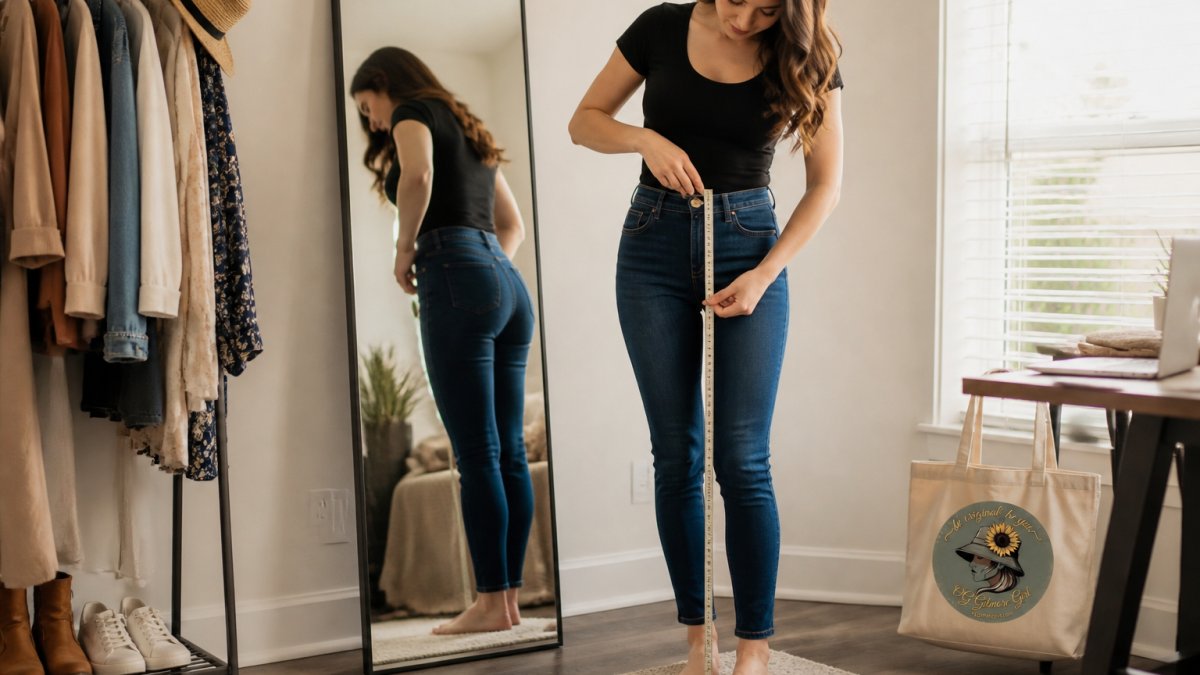
Create a reference sheet with your inseam, torso length, waist and hip measurements, best-fitting brands, and fit quirks. When browsing for how to find petite clothing that fits, reference this chart instead of guessing based on size numbers, which vary between brands. At OG Gilmore Girl, your measurements stay consistent even when sizing labels don't.

True petite pieces work better because every element, shoulder seam length, waistband position, is scaled for a smaller frame from the ground up.
High-waisted styles create visual breaks that make legs look longer and proportions feel balanced. Look for pieces where the waist hits your natural waist curve.
Tapered cuts create definition without excess fabric. Petite-specific jeans often have tapered ankles to prevent bunching.
Monochromatic styling creates a vertical line that makes your frame look taller. Vertical lines, stripes, open cardigans, long necklaces, draw the eye up and down, working in your favor with a smaller scale.
When you're dressing for work, how to find petite clothing that fits becomes even more critical. Professional pieces need to hit the right places and maintain structure without overwhelming your frame.
Petite-scaled blazers are essential. Standard blazers drown you with broad shoulders, long sleeves, and hems hitting around your hip. True petite blazers have narrower shoulders, shorter sleeves, and cropped length hitting at your waist, creating a polished silhouette.
Tailored pants in petite sizing have lower rise and cropped inseams with intentional proportions. The Denim Straight Leg Jeans from OG Gilmore Girl offer high-waisted fit with slight ankle taper, creating a flattering silhouette without alterations.

Structured dresses with defined waistlines and hemlines at your knee work better than flowing styles.
Even when you find petite-specific pieces, tailoring often makes the difference between "good fit" and "perfect fit." Some adjustments are worth the investment.
Hemming is straightforward DIY work. Measure the right length on your body with shoes you'll wear, mark with a pin, and sew a straight stitch a quarter-inch up from the fold. Use this for casual pieces; formal wear benefits from professional hemming.
Tapering is doable if comfortable with a sewing machine. Sew a new seam closer to the center, starting at the hem and working up. This is easier on stretchy fabrics than rigid denim.
Taking in waistbands prevents gaps. Take in side seams about a half-inch on each side or adjust the waistband itself for a quick fix.
Professional tailoring is worth the cost for structured or expensive pieces. A tailor can adjust proportions DIY methods can't, shortening torsos, adjusting armholes, reshaping garments. Cost is typically $15-$50 per alteration. Professional tailoring is essential for formal wear, wedding dresses, blazers, and tailored pants where precision matters.
Not every retailer offers true petite sizing, which is why knowing where to shop matters. Some brands scale their entire collection; others offer a petite line alongside standard sizing.
When you're evaluating a brand's petite collection, look for evidence that it's genuinely scaled, not just shortened. Check the product descriptions, do they mention adjusted torso length, armhole placement, and proportional sleeves? Do the size charts show different measurements for petite versus standard sizes?
Read reviews from other petite shoppers. If multiple people mention that pieces fit their proportions correctly without needing alterations, that's a sign the brand actually understands petite sizing.
Look at the fit photos. If the model wearing the petite size looks proportional in the piece (not swimming in it), that's a good indicator. If she looks like she's wearing regular clothes that happen to be shorter, that's not true petite sizing.
OG Gilmore Girl curates brands that understand petite proportions.
Footwear and accessories matter more than people realize when you're dressing a petite frame. Oversized shoes or chunky accessories can visually overwhelm your scale.
How you style pieces matters as much as what you buy. Strategic styling choices can make a significant difference in how proportional your overall look feels.
Vertical lines are your most powerful styling tool. They draw the eye up and down, creating the illusion of height and making your proportions feel more elongated.
A capsule wardrobe is a collection of versatile, high-quality pieces that work together. For petite proportions, this means investing in pieces that are actually scaled for your frame.
| Measurement | What It Is | Why It Matters | Typical Petite Range |
|---|---|---|---|
| Inseam | Inner thigh to ankle | Determines if pants hit at your ankle or bunch at your feet | 26"-30" |
| Torso Length | Base of neck to waist | Ensures shirts and dresses hit at the right places | 15"-17" |
| Armhole Placement | Where sleeve seam sits on shoulder | Prevents sleeves from being too long and overwhelming your frame | Should hit at or slightly above shoulder point |
Petite sizing is designed for women typically 5'4" and under, though it's not strictly about height alone. Petite clothing accounts for shorter inseams, smaller armhole placements, and proportionally shorter torso lengths. Some women above 5'4" benefit from petite sizing if they have a shorter frame, while others below 5'4" might wear standard sizes depending on their specific proportions. The key is measuring your individual dimensions, inseam, torso length, and rise, rather than relying solely on height.
Compare your actual measurements to brand size charts. Measure your inseam (inside leg length from crotch to ankle), torso length (shoulder to waist), and sleeve length. If standard sizes consistently bunch at your ankles, create excess fabric at your shoulders, or have sleeves that swallow your hands, petite sizing will fit better. Many women find they're a different size in petite lines than in standard sizing. OG Gilmore Girl's curated selection includes proportionally designed pieces that account for these differences, making it easier to find items scaled for your frame.
The biggest challenges are hemlines that fall too long, armholes positioned too far down the shoulder, sleeves extending past your wrists, and excess fabric at the waist and hips. High-waisted styles often sit too high, and standard rise jeans can create an unflattering proportion. Necklines and collars may also sit awkwardly. True petite-specific pieces address these by scaling down the entire garment, not just shortening the hem. This means shorter sleeves, smaller armholes, narrower shoulders, and adjusted rise heights so the proportions match your frame.
Some alterations work well, hemming pants, shortening sleeves, and taking in waistbands are straightforward. However, you cannot easily adjust armhole placement, neckline height, or shoulder seams without professional help and significant cost. For basics like jeans and simple pieces, tailoring can be worthwhile. OG Gilmore Girl's Denim Straight Leg Jeans at $35 and Distressed Ankle Jeans at $52 are designed with proportional fit in mind, which often requires less alteration than standard sizing. For investment pieces, starting with proportionally designed clothing saves time and money.


