The best loungewear body type match starts with comfort, then silhouette: pair a fitted piece with a relaxed one, check top length, and choose fabric with the right stretch and drape for your shape. Measure yourself and compare to each brand's size chart rather than relying on your usual size.
Comfort comes first: check how a set feels when you sit, stretch, and move.
Pair one fitted piece with one relaxed piece to keep the overall look balanced.
Choose a top that ends at or below the hip line for a more flattering length.
Favor fluid midweight drape for a skimming look, or rib knit for a defined shape.
Measure bust, waist, and hips, then compare them to each brand's chart, not your usual size.
Start With Fit: Why Loungewear Should Feel Comfortable First
Last Updated: October 28, 2026
Loungewear should feel good before it looks good. The best at-home outfit is the one you forget you're wearing, yet still feel put-together in.
Most people shop by color or print first. That's a mistake: fit and fabric decide whether a set becomes a favorite or ends up unworn.
Here's a simple rule: comfort first, style second. Once a set feels good, you can dial in the silhouette and the look.
Start with how it feels when you sit down
Check whether the waistband stays put without digging in
Move your arms and hips to test freedom of movement
How to Choose Loungewear by Body Shape
Body shape is a useful starting point, not a rulebook. Think of your loungewear body type as a guide for balancing proportions, not a list of things you're not allowed to wear. Most body types look great in loungewear once the fit is right.
Common body shapes include hourglass, pear, apple, rectangle, and inverted triangle. Each has different areas to balance, so the right silhouette changes from person to person.
Loungewear for Pear-Shaped Body Types
Pear-shaped shoppers often carry more volume through the hips and thighs. The goal is to draw the eye upward while keeping the bottoms comfortable and easy to move in.
Choose a relaxed or wide-leg bottom that skims rather than clings
Pick a longer top that covers the hip line
Try a V-neckline to add visual length through the upper body
The Long Leopard PJ Set pairs a silky long-sleeve top with matching long pants in a coordinated leopard-print look.
Loungewear for Apple-Shaped Body Types
Apple-shaped shoppers usually carry more weight through the midsection. Comfort matters most here, so look for soft, flowy fabric that doesn't pull at the middle.
Choose a relaxed, flowy top that drapes past the waist
Pair it with slim-leg or straight-leg bottoms for balance
Try vertical patterns or pinstripes to add a lengthening effect
The Star Print Top has a relaxed short-sleeve fit and soft knit fabric. Wear it solo or pair it with the matching Star Printed Shorts.
Hourglass, Rectangle, and Inverted Triangle Shapes
Hourglass shoppers often do well with fitted or semi-fitted pieces that follow the natural waist. Rectangle shapes can add curves with ruching, a defined waistband, or a layered look. Inverted triangle shoppers usually look best with bottoms that add volume below the hip, such as wide-leg or relaxed pants.
The best approach for any shape is the same: match the fit to how you want to feel, then choose the silhouette that makes you comfortable.
Step 1: Pick the Silhouette That Balances Your Proportions
Silhouette is the overall shape a set creates on your body. Relaxed silhouettes are loose and easy; form-fitting ones follow your curves. Neither is better; they do different jobs.
Here's how to choose:
Look at your top and bottom separately. Decide which half you want to highlight or soften.
Pair a fitted piece with a relaxed piece. This keeps the look balanced.
Check the top length. A top that ends at the hip line is often more flattering than one that stops right at the widest point.
Try the neckline. V-necks and scoop necks add length. Crew necks feel cozy and simple.
Watch out: A set that is too loose everywhere can make you look shapeless. Balance one loose piece with one more fitted piece.
Step 2: Choose Fabrics for Comfort, Stretch, and Drape
Fabric decides how loungewear feels all day, and how it behaves on your body. If you are choosing fabric and want to understand the benefits of organic cotton loungewear sets, that is a good place to compare options. Two sets can share the same cut and fit completely differently because of weight, stretch, and drape. "Soft" and "flowy" hide the properties that determine whether a piece clings, skims, or holds its shape.
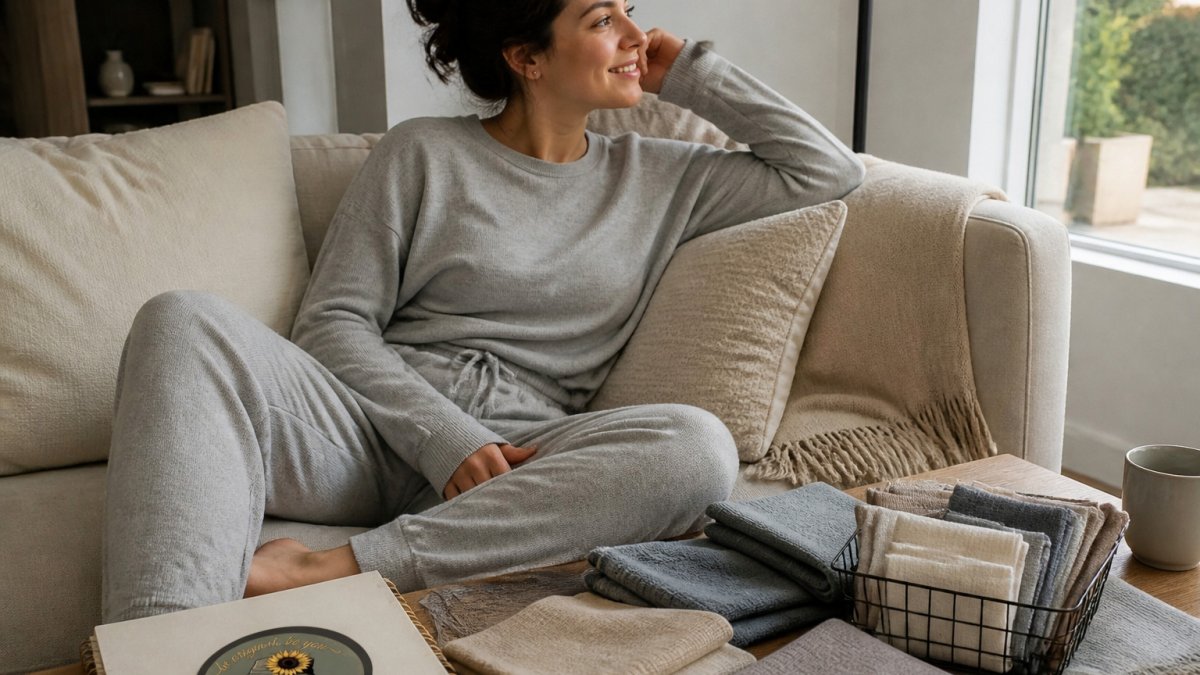
Woman in her late twenties relaxing on a sofa wearing a soft gray knit lounge set in natural daylight
The four properties that matter
Weight: Lightweight knits (often in the 4-6 oz per square yard range for jersey) drape and pack small but can show every line underneath. Midweight knits (roughly 6-9 oz) offer more coverage and structure without feeling heavy. Heavier fleece and French terry (often 9 oz and up) add warmth and hold their shape but can feel bulky through the hips and midsection.
Stretch: Look at the fiber content and any stretch percentage on the label. A knit with about 5% spandex or elastane recovers its shape after you sit and stretch; a 100% cotton jersey may relax and bag at the knees and seat over a long day. More stretch is not automatically better, very stretchy, thin fabric tends to cling.
Recovery: This is the fabric's ability to spring back. Rib knits generally recover well and hold a defined shape; loose single jerseys recover less and can stretch out. If you want a set that still looks put-together after hours on the couch, favor fabrics with good recovery.
Match the fabric to the fit you want
Want a skimming, forgiving look? Choose a fluid, midweight drape, modal blends, viscose, or a soft cotton-modal knit. These fall past the waist and hips instead of pulling across them.
Want structure and a defined line? Choose a rib knit or a heavier French terry. Rib holds its shape at the waistband and cuffs; terry gives pants a clean line rather than a clingy one.
Want warmth without bulk? Layer a lighter knit under a heavier top rather than buying one very thick piece. Two midweight layers trap warmth and let you remove one when you warm up.
Fabric and body shape, together
Fabric choice is where body-shape advice becomes practical:
Pear shapes often do best with a fluid top that drapes over the hip and a bottom with enough weight and recovery to keep its line through the thigh, a midweight knit or a relaxed wide-leg in a fabric that does not cling.
Apple shapes benefit from fluid drape through the midsection and a bottom with a bit of structure so the set does not read as shapeless. Avoid thin, highly stretchy fabrics that pull across the waist.
Hourglass shapes can use a rib knit or a fabric with recovery to follow the natural waist without squeezing.
Pro TipBefore you commit, do the sit-and-stand test in the fitting room or at home with the tags on: sit for a full minute, stand, and look at the knees, seat, and waistband. Fabric that bags or clings after one minute will do the same after an hour.
Quick fabric cheat sheet
Soft knit (jersey, cotton-modal): Lightweight, stretchy, comfortable; best for everyday lounging and sleep; can cling if thin.
Rib knit: Good recovery, holds shape, defines the waist; slightly less fluid.
Silky fabric (satin, silk, viscose): Smooth, fluid drape, polished look; less stretch, so fit matters more.
The Star Printed Shorts are soft gray knit shorts with an elastic drawstring waist.
Here is a quick summary of the fabric properties and what each one means for how loungewear fits and feels.
Fabric type
Best for
Key difference
Soft knit (jersey, cotton-modal)
Everyday lounging and sleep
Lightweight and stretchy; can cling if thin
Rib knit
Defined waist and shape
Good recovery; slightly less fluid
Silky fabric (satin, silk, viscose)
A polished look
Fluid drape; less stretch, so fit matters more
Cotton blends
Warmer days
Breathable and easy care; check for spandex
French terry and fleece
Warmth and structure
Holds shape; can add bulk
Step 3: Get the Fit and Sizing Right
Sizing varies between brands, so don't rely on your usual size alone. Measure yourself once, compare those numbers to each brand's size chart, and use fit notes to predict how a piece will behave. This is where most loungewear problems, rolling waistbands, tops that ride up, tight thighs, excess fabric, actually get solved.
Measure yourself the right way
Use a soft tape measure, snug but not tight, parallel to the floor.
Bust: Measure around the fullest part of your chest, keeping the tape level across your back.
Waist: Measure at the narrowest point of your torso, usually just above the navel. If you can't find a natural indent, measure at the level where you bend sideways.
Hips: Measure around the fullest part of your hips and seat, usually about 7-9 inches below the waist.
Write these numbers down. They are more useful than a size label because they let you compare across brands.
Read the size chart like an editor
Compare your measurements to the chart, not your usual size. A brand's medium may match another brand's large.
Check the fit label. "Relaxed," "regular," and "fitted" describe how much ease the garment is designed with. A relaxed fit already includes extra room; a fitted one does not.
Look for adjustable features. An elastic or drawstring waist gives you a range of fit, which is especially useful if you are between sizes.
Watch OutIf you are between sizes, size up for loungewear rather than down. Loungewear should never feel tight across the hips or chest, and a drawstring or elastic waist lets you take in the extra room.
Fit troubleshooting: common problems and fixes
Waistband rolls or digs in. This usually means the elastic is too narrow or the waist is sitting at the wrong height. Look for a wider, covered elastic or a drawstring, and try a higher or lower rise so the band sits on a flatter part of your torso rather than at the widest point.
Top rides up when you raise your arms. The top is too short for your torso length. Choose a longer hem, one that ends below the hip line, or a style with more length through the body.
Tight through the thighs. The bottom is cut too slim for your proportions. A relaxed, straight, or wide-leg cut gives more room through the thigh without sizing up the whole set.
Inclusive sizing and fit across a broad range
Fit guidance should work across a wide size range. Check whether a brand's size chart lists measurements for each size rather than only small, medium, and large. If it includes bust, waist, and hip ranges, compare all three, falling into different sizes on top and bottom is normal. Choosing the size that fits your largest measurement, then using adjustable waists or relaxed cuts elsewhere, gives the most comfortable result.
Key TakeawayFit is not about squeezing into a size. It is about matching measurements to the garment's design, then using adjustable features and cut to fine-tune comfort. Measure once, compare to the chart, and size up when in doubt.
Start Building Your Loungewear Set Today
You now have a clear plan: pick the silhouette that balances your proportions, choose fabrics that feel good, and get the fit right.
Ready to start? Shop the Long Leopard PJ Set, or explore the Star Print Top and Star Printed Shorts.
Start with how you want the set to feel, then match the silhouette to your proportions. Relaxed, looser tops balance wider hips, while fitted or semi-fitted tops work well if you want to show your waist. Choose soft, breathable fabrics like cotton or a lightweight knit so the fit stays comfortable through the day. The Star Print Top and Star Printed Shorts are both soft gray knit, and you can wear them together or separately.
What loungewear styles are most flattering for a pear-shaped body?
Pear-shaped figures often look balanced in loungewear with a fuller or slightly structured top paired with relaxed bottoms that skim rather than cling. Choose tops with interest at the shoulders or neckline to draw the eye upward, and avoid overly tight fabric on the hips and thighs. The Star Print Top has a relaxed fit and pairs with the Star Printed Shorts.
How should petite people choose loungewear?
Petite shoppers usually do best with shorter inseams, cropped or shorter-length tops, and shorts that sit at a comfortable length. Avoid long, drapey pieces that overwhelm a smaller frame unless they are tailored to fit. The Short Leopard PJ Set has a short-sleeve top and matching short bottoms.
Should loungewear be loose or fitted?
Loungewear works best when it is comfortable enough to move in, which usually means relaxed or semi-fitted rather than tight. Loose pieces give freedom of movement and suit everyday lounging, while more fitted cuts can look polished for a home office or errands. Pick the fit that lets you sit, stretch, and move without pulling or bunching, and remember that soft stretch fabrics can make a slightly snug fit more comfortable.
Petite jumpsuits for everyday wear, compared on fit, length and fabric. Get outfit ideas for each pick before you buy. Compare your options before you buy.
Learn how to price clothing boutique items using markup formulas, cost calculations, and market research. Step-by-step pricing strategy for retail success.
Discover the best professional footwear to pair with shirt dresses. From ankle boots to flats, find comfortable office shoes that elevate your work style.
Discover the real benefits of investing in boutique clothing, from better quality to lower cost per wear. Learn how to spot well-made pieces that last.
Discover eco friendly loungewear brands for women that prioritize sustainable materials and ethical production. Shop comfortable, stylish options today.
Affordable matching lounge sets for petite women: Shop affordable matching lounge sets designed for petite women. Find cozy, stylish options with proper.
Casual vs cocktail dress codes explained: what to wear to each, key differences, and how to nail wedding guest attire. Get the guide and shop the look.
Discover the quiet luxury trend in 2026: timeless style, intentional consumption, and effortless elegance. Learn how to build your curated wardrobe today.
Dress up loungewear for work: Master the art of dressing up loungewear for work. Learn styling tricks, fabric choices, and layering techniques to look.
Learn how to style simple dresses for beginners with easy tips on accessories, layering, and capsule wardrobe essentials. Discover effortless looks today.
Learn how to mix and match different denim styles with confidence. Master washes, textures, and fits for a polished denim-on-denim look. Start styling.
Learn how to wear casual dresses to a wedding with confidence. Get styling tips, dress code guidance, and outfit ideas for every venue and season. Shop.
Find the best everyday dress fabrics for comfort, breathability, and easy care. Compare cotton, linen, rayon, and blends, then shop styles you'll love.
Dad jeans vs mom jeans: learn the real difference in rise, leg shape, and fit, plus styling tips for each. Find your perfect pair and shop with confidence.
Learn how to wear wide leg jeans for pear shape in 2026 with fit tips, styling tricks, and denim picks that balance hips and define your waist. Shop now.
Swap your jeans for casual dress alternatives that feel just as easy. Explore comfy pants, midi skirts, and dresses to refresh your everyday look. Shop.
Super cute and soft but so long on my 5ft frame and rip on inseam:(
Everything was done to make the issue right. A free return and refund was offered and declined. We offered to pay for the seamstress to fix the tear. A 40% discount was also given for a future purchase for the inconvenience.