Your cart is empty
Tax included and shipping calculated at checkout
Drawer menu
Tax included and shipping calculated at checkout

Last Updated: August 27, 2026
A boutique clothing store is a small, independently-owned or specialized retail shop offering carefully curated inventory rather than mass-produced fashion. Unlike department stores stocking thousands of items across multiple brands, a boutique curates its collection around a specific aesthetic, niche market, or customer demographic. Every piece reflects the owner's vision and understanding of their target customer, this is deliberate curation, not random stock.
The boutique retail experience emphasizes personal connection. Store owners and staff have deep product knowledge and offer styling advice, fit recommendations, and personalized service that big-box retailers cannot match. This human element transforms shopping from a transaction into a relationship, building customer loyalty in ways larger retailers don't achieve.
At OG Gilmore Girl, we understand what makes a curated selection powerful: the difference between walking into a store where everything feels intentional versus one where you're overwhelmed by endless options. Our approach brings that boutique philosophy to online shopping, offering trendy apparel from trusted brands that align with a specific aesthetic and quality standard.
The distinction between a boutique and a traditional retail store goes far beyond size. While a department store might carry 10,000 SKUs across dozens of brands, a boutique typically stocks 500-2,000 carefully selected pieces (nrf.com). This fundamental difference shapes everything from inventory management to customer service to store atmosphere.
Inventory Selection and Curation
A boutique's inventory reflects a specific point of view. The owner has decided exactly which brands, styles, colors, and price points align with their brand identity. A retail store uses data-driven algorithms and corporate buying decisions to appeal to the broadest possible audience. A boutique says "this is who we are"; a retail chain says "we have something for everyone." In a boutique, you're more likely to find unique pieces you won't see everywhere else.
Store Atmosphere and Brand Identity
Walk into a boutique and you immediately sense the owner's aesthetic. The lighting, music, displays, and even scent are intentional, reinforcing brand identity. A retail store prioritizes efficiency and standardization, with layouts designed to maximize traffic flow and impulse purchases. The atmosphere serves the business model, not the brand identity.
Customer Service and Personal Attention
In a boutique, staff offer genuine styling advice based on deep product knowledge and understanding of fit quirks. Retail store staff are trained to process transactions efficiently but rarely have expertise to offer detailed styling guidance. The difference is stark when you need help finding something that works for your body and lifestyle.
Pricing and Margins
Boutiques typically operate on higher margins than retail chains, reflecting the cost of curation, personal service, and smaller inventory volume. A boutique can't compete on price; instead, they compete on experience, exclusivity, and quality.
The curated inventory is the engine of a successful boutique. It's not just what you sell, it's how you define your business and build customer loyalty.
Understanding Your Customer Demographics
Successful boutique owners know their customer deeply and make intentional buying decisions based on that understanding. If your customer is a busy professional seeking quality loungewear that looks polished, you stock brands that deliver that. If your customer is sustainability-focused, you source ethical, eco-conscious pieces. This deep customer understanding drives every buying decision and creates a feedback loop: the better you know your customer, the better you curate, the more loyal your customers become.
The Psychology of Selection and Exclusivity
When faced with too many options, customers experience decision paralysis (peer-reviewed research). A boutique solves this through expert curation, pre-filtering options with the message: "We've already done the work for you. Everything here is worth your consideration." This reduces cognitive load and increases purchase confidence. Exclusivity also matters, knowing a piece isn't available at every mall makes it feel more special, driving customer retention and brand loyalty.
Merchandising as a Strategic Tool
Strategic merchandising creates visual narratives that help customers envision outfits and lifestyles. Grouping pieces by occasion or color story rather than category helps customers shop intuitively. A well-merchandised boutique guides customers through a journey. Online boutiques like OG Gilmore Girl bring this same intentionality to digital curation, carefully selecting pieces that work together as a cohesive collection.
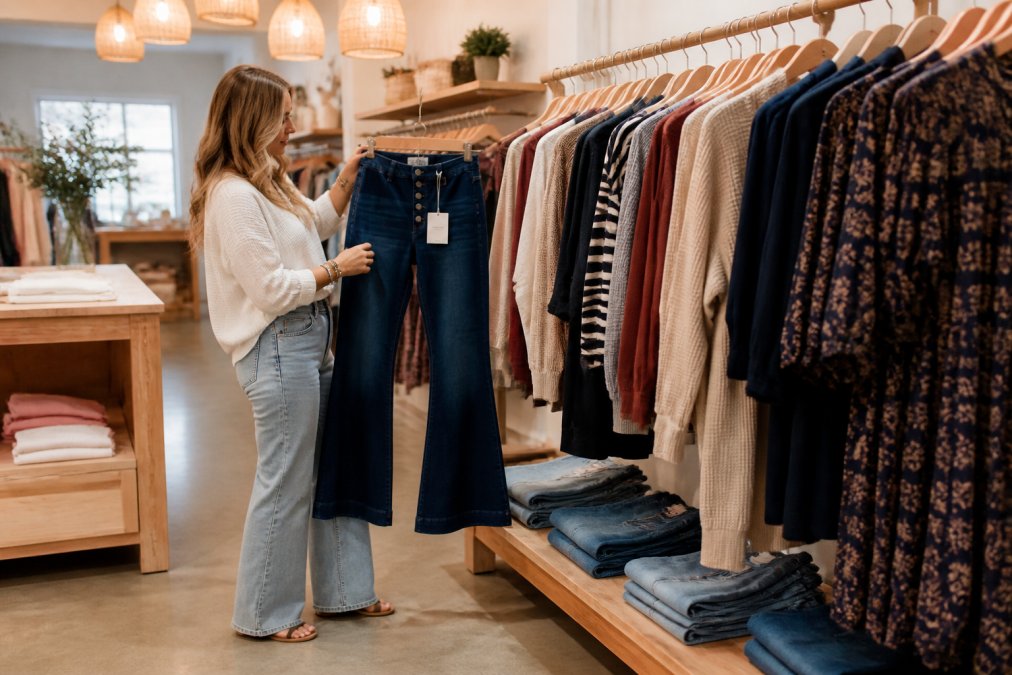
The shopping experience is where boutiques truly differentiate themselves. It's about creating a moment that feels personal, intentional, and memorable.
Personalized Styling and Expert Guidance
A boutique staff member can look at a customer and understand what will work for their body, lifestyle, and aesthetic. They pull pieces that complement what you're wearing, suggest styling combinations you hadn't considered, and be honest about fit. Many customers visit boutiques specifically for this expertise, trusting the staff's eye more than their own judgment.
Creating Community and Belonging
The best boutiques create a sense of community. Regular customers become part of a tribe sharing aesthetic values and lifestyle priorities. The owner and staff know them by name, remember their preferences, and alert them to new arrivals matching their style. This transforms a retail transaction into a social experience and drives remarkable loyalty through word-of-mouth marketing.
The Sensory Experience
Every element of a boutique's environment contributes to the shopping experience: lighting, music, scent, temperature, and how clothes are organized. A well-designed boutique engages all the senses, making shopping feel like an experience rather than a chore. Online boutiques like OG Gilmore Girl recreate this through detailed product photography, honest fit reviews, and a carefully curated digital aesthetic reflecting brand identity.
Shopping at local boutiques offers tangible benefits beyond the products themselves, explaining why customers become fiercely loyal despite higher prices and smaller selection.
Supporting Independent Ownership
When you shop at a boutique, your money typically stays in the local community. Independent owners reinvest profits into their businesses, employ local staff, and contribute to the local economy in ways chain retailers don't. Supporting someone's creative vision creates a different emotional dynamic than shopping at a corporate chain.
Quality Over Quantity
Boutiques typically stock higher-quality pieces than mass-market retailers. Because inventory is curated rather than volume-driven, owners can be selective about construction, materials, and brand reputation. A well-made piece you wear for years is better value than a trendy fast-fashion item you wear twice.
Discovering Unique Pieces
In a boutique, you're more likely to find pieces you won't see on everyone else. This matters psychologically, many people shop to express individuality. A boutique delivers on that desire in ways a department store cannot.
Personalized Fit and Sizing
Boutique staff understand fit intimately and know which brands run small or large and which fit certain body types well. Many boutiques offer tailoring services or recommend local tailors, making it easier to get pieces altered to fit perfectly.
The rise of online boutiques has made curated, boutique-quality fashion accessible without geographic limitations. Finding the right online boutique requires understanding what to look for.
Identifying Authentic Boutique Retailers
A true online boutique should have a clear brand identity and aesthetic. Do all pieces feel cohesive? Do they tell a story? An authentic boutique has a point of view. Look at how they describe their curation, do they explain why they chose certain brands? Check the brand mix: a boutique typically carries 5-15 brands rather than 50+, allowing deep relationships with vendors.
Evaluating Product Quality and Fit
Look for detailed product photography and honest fit reviews. Can you see fabric texture? Are there customer reviews mentioning fit and durability? Pay attention to sizing information, does the retailer provide detailed size charts and notes about how pieces fit? This level of detail signals genuine commitment to customer satisfaction.
Building Relationships with Online Boutiques
The best online boutique experiences involve genuine customer relationships. Does the retailer respond to inquiries? Do they offer personalized recommendations? Some online boutiques now offer virtual styling consultations.
OG Gilmore Girl offers a curated selection of trendy apparel from trusted brands with detailed product information and a loyalty program rewarding repeat customers. The G-Bucks loyalty program lets you earn rewards on every purchase, and 15% off your first order makes it easy to try the boutique experience. Free shipping on orders over $100 removes friction from larger purchases.
Understanding the economics of a boutique clothing store explains pricing, inventory decisions, and why boutiques operate differently from retail chains.
Operating Overhead and Inventory Costs
A boutique carries significant fixed costs: rent, staff salaries, utilities, and insurance. These costs don't scale with sales volume the way they do for large retailers. A boutique ties up capital in carefully selected stock that may take weeks to sell, requiring higher prices to cover costs and generate sufficient profit.
Margin Requirements and Pricing
Most boutiques operate on 50-60% gross margins, compared to 40-45% for department stores (sba.gov). This higher margin is necessary to cover overhead, staff, and operational costs. Boutique clothing stores can't compete on price with Amazon or fast-fashion retailers, their business model is fundamentally different, competing on experience, curation, and service.
The Sustainability Challenge
Many boutique owners struggle with unit economics. The boutique business model works when the owner has deep customer relationships, a clear brand identity, and the ability to create genuine community. Supporting boutiques matters because they operate on tighter margins than corporate retailers, and customer loyalty directly impacts their viability.
A boutique clothing store succeeds because it creates intentionality, community, and personalized service that retail chains fundamentally cannot. Every piece reflects careful curation. Every customer interaction reflects genuine expertise. The boutique business model prioritizes relationship and experience over volume and convenience.
Whether shopping in person or online, the boutique experience centers on finding pieces that work for your life and body, from retailers who understand your style and care about your satisfaction. At OG Gilmore Girl, we bring that boutique philosophy to online shopping. Our curated selection of trendy apparel from trusted brands reflects a specific aesthetic and quality standard. We offer 15% off your first order and free shipping on orders over $100. Our G-Bucks loyalty program rewards repeat customers, and our commitment to detailed sizing information and honest product descriptions ensures you find pieces that actually fit. Shop Now and experience the difference a truly curated selection makes.
A boutique clothing store is defined by its curated inventory, independent ownership, and focus on a specific niche market. Unlike mass-market retailers, boutiques carry carefully selected merchandise that reflects a distinct brand identity and aesthetic. They typically feature exclusive collections, personalized customer service, and a shopping environment designed to create a unique retail experience. Size varies, but boutiques usually operate on a smaller scale with lower operational overhead than department stores.
Shoppers choose boutiques for the curated selection, personalized attention, and unique value proposition they offer. Boutiques provide bespoke service, expert styling advice, and access to exclusive or hard-to-find pieces. The retail differentiation, from storefront aesthetics to brand positioning, creates a more engaging shopping environment. Customers also appreciate supporting independent ownership and building customer loyalty with brands that understand their personal style and needs better than mass retailers.
Boutique clothing stores emphasize curated inventory and niche positioning, while retail chains focus on volume and broad appeal. Boutiques offer personalized service and a distinctive store atmosphere; chains prioritize efficiency and standardized experiences. Boutiques source selectively to reflect their brand identity; chains carry mass-produced merchandise. Additionally, boutiques typically have lower market saturation in their specific niche, allowing for stronger customer retention and brand loyalty compared to the generic approach of large retail chains.
Boutique prices often reflect higher quality, exclusive designs, and personalized service rather than simply being more expensive. While some boutiques command premium pricing for luxury items, others offer competitive prices for curated, on-trend pieces. The value lies in the sourcing quality, unique collections, and shopping experience, not just the price tag. Many customers find boutique pricing justified by better fit, durability, and the confidence boost from pieces selected specifically for their style and needs.
Ready to build a wardrobe filled with pieces you actually love? The psychology of curated retail and consumer decision-making shows that thoughtful curation reduces decision fatigue and increases purchase satisfaction. Start with OG Gilmore Girl's curated collection and discover how intentional shopping transforms your style.
This article was written using GrandRanker


