Your cart is empty
Tax included and shipping calculated at checkout

Menú de cajones
Tax included and shipping calculated at checkout

Last Updated: September 13, 2026
Yes, are cotton dresses worth it for summer? For most wardrobes, the answer is a clear yes. Cotton is a breathable natural fiber that moves air against your skin, handles humidity better than most synthetics, and holds up through repeated washing. Cotton dresses are a popular choice for many from June through September.
The catch is that not every cotton dress performs the same way. Fabric density, weave, and silhouette decide whether a dress feels cool at 2 p.m. or turns into a sticky mess by noon. Below, we break down exactly what separates a cotton dress worth owning from one that hangs in your closet untouched.
The biggest advantage of cotton is thermal regulation. The fiber absorbs moisture and lets air circulate, which is why the U.S. Department of Agriculture's cotton research overview continues to describe cotton as one of the most widely used natural fibers for warm-weather clothing. A common mistake is assuming every cotton dress is lightweight. Heavier weaves like denim or twill trap more heat than a poplin or seersucker.
Pros:
Cons:
Prioritize weave and fabric weight over price tags. A lightweight poplin or seersucker will keep you cooler than a dense twill, even when both are 100% cotton. Look for unlined woven fabrics, since linings add a layer that traps humidity.
Check the silhouette too. A loose fit supports air circulation, while a fitted bodice in heavy fabric fights it. If you want a dress that works for a heatwave, aim for a tiered or A-line cut in a breathable weave.
Cotton wins on versatility and easy care, while linen wins on raw breathability. Both are natural fibers, and both handle heat well, but they behave differently in daily wear.
Linen wicks moisture faster and feels cooler in dry heat, which is why it's a classic for vacation attire. The trade-off is wrinkles. Linen creases the moment you sit down, and it can feel stiff until it softens with washing. Cotton holds its shape better, resists wrinkles slightly more, and works across casual wear and day-to-night outfits.
| Factor | Cotton | Linen |
|---|---|---|
| Breathability | High | Very high |
| Wrinkle resistance | Moderate | Low |
| Durability | High | Moderate |
| Care | Machine washable | Often needs gentle care |
| Best for | Everyday summer wardrobe | Dry-heat vacation attire |
For most people building a summer wardrobe, cotton is the more practical pick. Linen shines for beach days and dry climates, but cotton handles humidity, repeated washing, and everyday styling with less effort.
The best cotton dress styles for heatwaves are tiered and loose silhouettes in lightweight weaves. These cuts keep fabric off your skin and let air move, which is exactly what you want when temperatures climb.
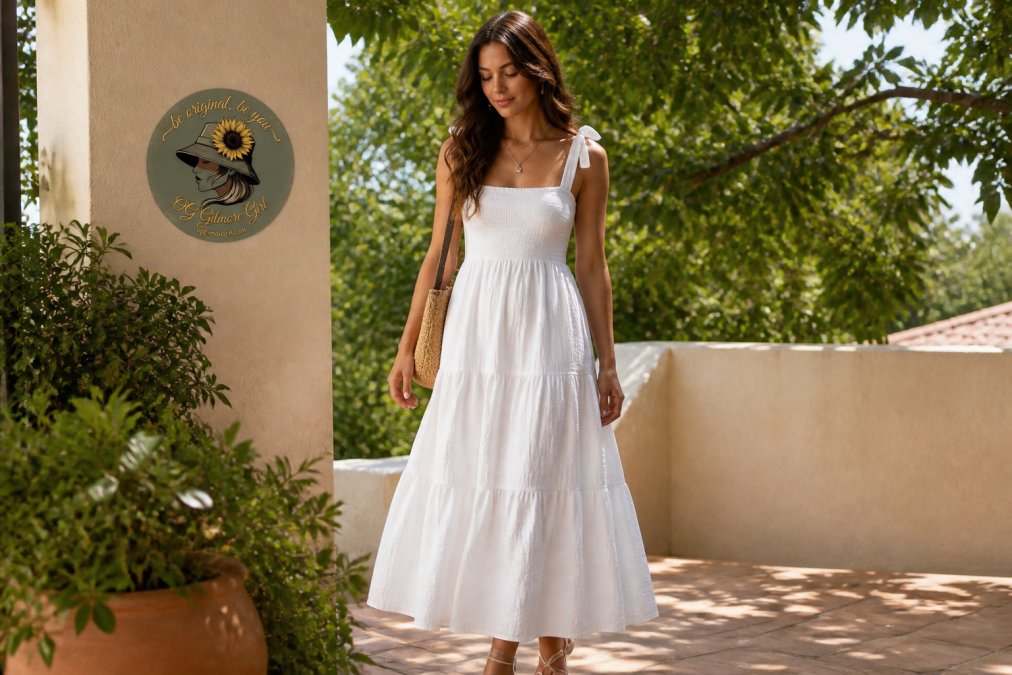
Tiered and A-line cuts outperform fitted styles in heat. The tiered silhouette adds movement and space between the fabric and your body, which supports air circulation. A maxi dress in a light weave protects you from direct sun without trapping heat, while a mini or midi works for humid days when you want maximum airflow.
Our Floral Tiered Sun Dress is a good example of what to look for: lightweight unlined woven fabric, a sleeveless design, and a tiered cut that moves with you. If you prefer something with a bit more coverage, the Leopard 3/4 Sleeve Tiered Maxi Dress uses the same flowy tiered shape in a maxi length.

Wash cotton in cold water and air-dry when you can. Cold water limits shrinkage, and air-drying protects the fibers from the heat damage that tumble dryers cause over time. This is the single biggest factor in garment longevity for cotton. But care is about more than laundry, it's also about keeping a cotton dress looking crisp and opaque through a long, hot day.
Cotton wrinkles because its cellulose fibers crease under pressure and hold the fold, unlike synthetics, which spring back. That's the trade-off for breathability, and it's the number-one complaint about cotton dresses. A few habits keep wrinkles manageable:
Thin, light-colored cotton, voile and lawn especially, can turn see-through in bright sun. A few fixes:
What most guides miss is that over-washing shortens a dress's life more than wearing it does. Cotton is durable, but every wash cycle breaks down fibers a little. Wearing a dress two or three times between washes, with a quick air-out, meaningfully extends its life and keeps the fabric's breathability intact.
Value in a cotton dress comes down to fabric quality and construction, not the number on the tag. A well-made cotton dress that survives two summers costs less per wear than a cheap one that pills after five washes.
At OG Gilmore Girl, prices start low and scale with fabric and detail. The Yellow Tiered Mini Dress and the Gray/Blue Leopard T-shirt Dress both come in at $6.30, while the Floral Print Loose Dress is $42.00 and the tiered maxi is $60.00.


| Dress | Price | Best For |
|---|---|---|
| Yellow Tiered Mini Dress | $6.30 | Budget summer staple |
| Floral Tiered Sun Dress | $8.10 | Everyday warm-weather wear |
| Denim Summer Dress | $20.00 | Casual day-to-night looks |
| Floral Print Loose Dress | $42.00 | Relaxed, put-together style |
| Leopard Tiered Maxi Dress | $60.00 | Statement evening wear |
Free shipping on orders over $100 and 15% off your first order make it easier to try a couple of styles without overcommitting.
Cotton dresses transition from day to night with a few swaps, not a full outfit change. The trick is layering and accessories. A tiered sundress works for brunch with flat sandals, then reads as evening-ready with heeled sandals, gold jewelry, and a structured bag.
For casual wear, pair a T-shirt dress with white sneakers and a denim jacket. For vacation attire, add a straw hat and espadrilles. When you want a dress that carries you through a full day, choose a neutral or versatile print so accessories do the heavy lifting. The Denim Summer Dress is built for this: lightweight denim, side pockets, and an easy tiered cut that dresses up or down.
The most common mistake is buying cotton by name alone and ignoring weave and weight. A dress labeled 100% cotton can still feel hot if it's a dense twill or fully lined.
Other mistakes we see often:
Sizing trips up more shoppers than fabric does. A size 8 at one brand can be a 12 at another, so check the size chart and reviews that describe fit before ordering. For petites, confirm the length, since many midi and maxi styles run long.
Choosing a summer dress that actually keeps you cool comes down to fabric weight, weave, and silhouette, not just the label. Get those right and cotton earns its place in your warm-weather rotation.
OG Gilmore Girl curates cotton dresses built for exactly this, from the $6.30 tiered mini to the $60.00 leopard maxi, all backed by free shipping on orders over $100, 15% off your first order, and G-Bucks rewards on every purchase. Shop now and build a summer wardrobe that stays cool and looks effortless.
Yes. Cotton is a natural fiber that lets air circulate and wicks moisture away from the skin, which keeps you cooler in high heat and humidity. It is also hypoallergenic and easy to wash, making it a practical choice for daily summer wear. The main trade-off is wrinkling, but a quick steam before you head out solves that.
Not if the fabric is lightweight. Cotton's thermal regulation depends on fabric density and weave. A thin poplin or seersucker lets heat escape far better than a heavy canvas. Look for unlined woven cotton or loose tiered silhouettes, which allow air circulation and feel noticeably cooler than dense, tightly woven cotton garments.
Linen edges out cotton slightly on pure breathability because its fibers are hollow and move air more freely. Cotton, however, is softer against the skin, holds color better, and wrinkles less aggressively. For most summer days, cotton wins on comfort and ease of care; linen wins on maximum airflow in extreme heat. Both are solid natural fiber choices.
The main drawbacks are wrinkling, shrinkage in hot water, and slower drying compared to synthetic blends. Cotton also loses some shape retention over repeated washes if you machine-dry it on high heat. Washing cold and air-drying preserves garment longevity and keeps the fit consistent. These are manageable trade-offs for the breathability you gain.
A tiered midi or maxi dress works for casual wear with sandals and a straw bag, then transitions to day-to-night with wedges and statement earrings. For a vacation or brunch look, a packable sundress with ruffle sleeves pairs well with white sneakers. Layering a denim jacket or cardigan over a cotton dress extends it into cooler evenings without losing the breezy feel.


