You just dropped good money on a pair of raw denim jeans, and now you're wondering how to soften stiff raw denim that feels like cardboard. That's normal. Learning how to soften stiff raw denim starts with a simple truth: you need very little equipment, but you do need patience.
Here's what to gather before you begin:
A bathtub, large sink, or clean plastic tub
Lukewarm water
White vinegar (optional, but helpful)
Gentle detergent made for dark fabrics
A drying rack or clothesline
Time (a few hours, spread over weeks)
Pro TipSkip the dryer. High heat weakens cotton fibers and can shrink your jeans more than you want. Air drying keeps the fabric strong.
The Raw Denim Break-In Process: What to Expect
Raw denim is denim that hasn't been washed or treated after dyeing. Because of that, the fabric starts out stiff, dark, and full of starch. The raw denim break-in process is simply the work of wearing and washing that stiffness away over time.
Week 3-6: Softer texture, whiskers and honeycombs starting to show
Month 2-3: Comfortable fit, visible indigo fading
Month 6+: Fully broken in, molded to your body
Soaking Raw Denim: The First Step to Softness
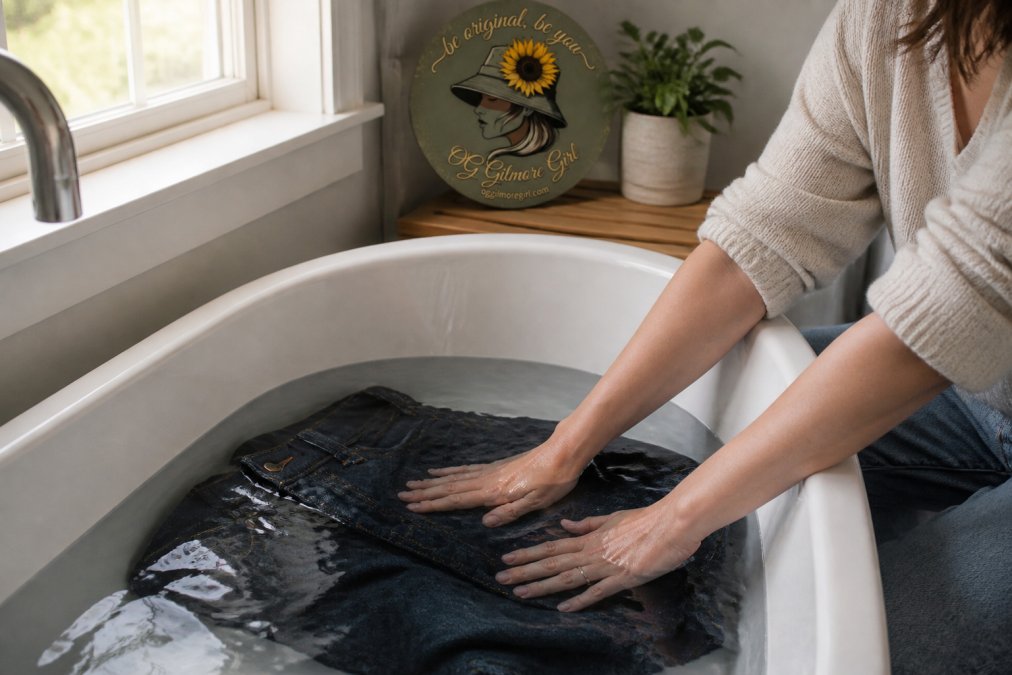
Soaking raw denim is the fastest way to remove starch and loosen up the cotton weave. Fill a tub with lukewarm water, add a capful of white vinegar if you want extra softening, and submerge your jeans completely.
A person gently soaking stiff raw denim jeans in a bathtub of lukewarm water to soften the fabric.
How Long Should You Soak?
Soak time depends on how stiff your jeans are and how much starch is in the fabric. A common approach is:
Light stiffness: 30 minutes
Medium stiffness: 45 minutes to 1 hour
Heavyweight or very stiff denim: 1 to 2 hours
Watch OutNever use hot water. It speeds up shrinkage and strips indigo fast. Lukewarm water is the safe zone.
How to Wash Raw Denim Without Losing Fades
Washing raw denim the wrong way is the fastest route to dull, patchy color. The goal is to clean the fabric without scrubbing away the indigo you've worked hard to build.
Turn jeans inside out to protect the outer surface
Fill a tub with cold water
Add a small amount of gentle detergent
Submerge and soak for 20 to 30 minutes
Rinse with cold water until it runs clear
Hang to air dry, away from direct sun
Cold Water Wash and Gentle Detergent
Cold water keeps indigo from bleeding out. Gentle detergent cleans without harsh chemicals that break down cotton fibers. Together, they protect both the color and the denim texture.
Mechanical Softening Methods That Actually Work
Water and vinegar do the chemical work. Mechanical methods do the physical work, flexing the cotton weave so the starch crystals crack and the fibers slide against each other. Most guides wave at this idea and move on. Here is what actually happens and how to do it without wrecking your jeans.
Manual manipulation (no tools, no risk)
The roll-and-knead. Lay the jeans flat, roll each leg from hem to hip like a sleeping bag, then knead the roll with both hands for 3-5 minutes per leg. Unroll, re-roll from the other direction, repeat. Do this once a day for the first two weeks.
The accordion fold. Fold the fabric back and forth in 2-inch pleats along the thigh and knee, pressing each pleat firmly with your palm. This mimics the creasing that happens when you sit.
The waistband twist. Grip the waistband at the front button and the back center, then twist in opposite directions. Work in 10-second holds, five reps. This loosens the stiffest part of most new pairs.
Wear-based flexing (the highest-yield method)
Wearing the jeans is still the most effective mechanical softener because your body supplies thousands of small flex cycles a day. To speed it up:
20 slow bodyweight squats in the jeans, once in the morning and once in the evening, for the first week.
Sit cross-legged on the floor for 15-20 minutes while watching TV or working. This stresses the knees and hips, which are the slowest areas to soften.
Climb stairs instead of taking the elevator when you can. Each step is a full knee-and-hip flex cycle.
Tumble drying, the safe protocol
A dryer can soften denim faster than anything else, but only if you control the heat. High heat shrinks cotton and weakens fibers, so the rule is: low heat or no heat, short cycles, never unattended.
A common enthusiast approach:
Turn the jeans inside out and button them.
Add two or three clean tennis balls or dryer balls to beat the fabric against itself.
Run 10-15 minutes on the lowest heat setting (or "air fluff" / "no heat" if your machine has it).
Pull them out while still slightly damp and hang to finish drying.
Watch OutNever run raw denim on a normal or high-heat cycle. The combination of heat and tumbling is what causes the shrinkage and premature fiber breakdown most people blame on washing.
What to avoid
Do not machine-wash on a normal cycle just to soften denim. The agitation is too aggressive and the spin cycle sets hard creases in the wrong places.
Do not use a wire brush, sandpaper, or pumice stone. These abrade the surface and produce fake-looking, patchy fades rather than genuine wear.
Do not stretch the waistband over a chair back or door handle overnight. It puts uneven stress on the seams and can pop stitching.
Key TakeawayMechanical softening is cumulative. Ten minutes a day for two weeks beats one aggressive two-hour session every time, and it protects both the seams and the indigo.
How Fabric Weight and Starch Affect Softening Time
Denim weight is measured in ounces per square yard, and it changes everything about how long softening takes, and, more importantly, how you should soften. This is the part most guides skip.
10-12 oz: Lightweight. Softens in 2-4 weeks with normal wear. A single 30-minute soak is usually enough.
13-15 oz: Midweight. Softens in 1-2 months. The sweet spot for most people, stiff enough to fade well, light enough to break in without misery.
16-20 oz: Heavyweight. Softens in 3-6 months. These need a longer initial soak and more deliberate mechanical work.
20 oz+: Ultra-heavy. Can take 6 months or more. Expect a genuine break-in project, not a weekend fix.
Denim Type
Starch Level
Softening Time
Shrinkage Risk
Sanforized, 12 oz
Low
2-4 weeks
Minimal
Unsanforized, 14 oz
Medium
1-2 months
Moderate
Heavyweight, 18 oz
High
3-6 months
Higher
Ultra-heavy, 21 oz
Very high
6+ months
Higher
How weight changes your strategy
Weight is not just a timeline, it dictates which methods are safe and which are a waste of time.
10-14 oz: A 30-45 minute lukewarm soak plus daily wear is enough. You can afford to wash more often because the fabric fades slowly and evenly.
15-18 oz: Extend the initial soak to 60-90 minutes and add deliberate mechanical work (squats, kneading, short low-heat dryer cycles). These jeans will not soften from wear alone in a reasonable timeframe.
19 oz and up: Treat the first soak as a 2-hour session, then commit to a daily mechanical routine for at least a month. Ultra-heavy denim is stiff enough that many people find the first two weeks genuinely uncomfortable, that is normal, not a sign you bought the wrong size.
Softening heavyweight denim without killing your fades
Soak less, wear more. For heavyweight denim, one initial soak is usually enough. After that, rely on mechanical softening and spot-cleaning rather than repeated full soaks.
Keep the water lukewarm, never hot. Hot water strips indigo dramatically faster than lukewarm water at the same soak duration.
Skip the vinegar if you are chasing fades. Vinegar is a mild acid and can shift the color slightly over repeated use. It helps soften, but it is not free.
Wash inside out, cold, and rarely. Every 2-3 months at most, and only when the jeans actually need it. Spot-clean between washes with a damp cloth.
Accept that some indigo loss is the price of softness. The jeans that fade the sharpest are usually the ones that were worn the hardest and washed the least, not the ones that were never touched by water.
Pro TipIf preserving high-contrast fades matters more to you than fast softening, prioritize mechanical methods and daily wear over soaking. You will wait longer, but the whiskers and honeycombs will stay sharp.
If you are shopping for denim that breaks in faster without sacrificing fade potential, look for sanforized pairs in the 12-14 oz range.
How to Soften Raw Denim Quickly: 3 Proven Tricks
Want faster results? These three tricks work without damaging the fabric or fading your indigo.
Pro TipPair the vinegar soak with daily wear. The two methods together soften denim faster than either one alone.
Frequently Asked Questions
How long does it take raw denim to soften?
Raw denim typically softens over 2 to 6 months of regular wear, depending on fabric weight and how often you wear them. A 12 oz pair might feel comfortable after a few weeks, while 21 oz heavyweight denim can take several months. Soaking and washing speed up the process, but the most natural softening comes from daily wear and movement.
Does soaking raw denim make it softer?
Yes, soaking raw denim in lukewarm water helps relax the cotton fibers and removes some of the starch that makes the fabric stiff. A 30 to 60 minute soak can make jeans noticeably softer, but it may also cause slight indigo loss.
Can you use fabric softener on raw denim?
Avoid fabric softener on raw denim. It coats the cotton fibers and can trap dirt, reduce breathability, and interfere with the natural fading process. Instead, use a gentle detergent.
How to break in rigid denim jeans faster?
To break in rigid denim faster, wear them daily for at least a few hours, even around the house. Try squatting, climbing stairs, or sitting cross-legged to create stress points that soften the fabric. You can also do a 30-minute soak in lukewarm water with white vinegar, then wear them damp to help them mold to your body.
Stiff raw denim can feel like a mistake in the first week. It isn't. Every soak, every wear, and every bend is shaping the fabric into something that fits only you. At OG Gilmore Girl, we know the right pair makes that effort worth it, which is why our curated denim selection focuses on trusted brands and quality fabrics that break in beautifully. Enjoy free shipping on orders over $100, 15% off your first order, and G-Bucks on every purchase. Shop now and find your next favorite pair.
Learn how to price clothing boutique items using markup formulas, cost calculations, and market research. Step-by-step pricing strategy for retail success.
Discover the best professional footwear to pair with shirt dresses. From ankle boots to flats, find comfortable office shoes that elevate your work style.
Discover the real benefits of investing in boutique clothing, from better quality to lower cost per wear. Learn how to spot well-made pieces that last.
Discover eco friendly loungewear brands for women that prioritize sustainable materials and ethical production. Shop comfortable, stylish options today.
Affordable matching lounge sets for petite women: Shop affordable matching lounge sets designed for petite women. Find cozy, stylish options with proper.
Casual vs cocktail dress codes explained: what to wear to each, key differences, and how to nail wedding guest attire. Get the guide and shop the look.
Discover the quiet luxury trend in 2026: timeless style, intentional consumption, and effortless elegance. Learn how to build your curated wardrobe today.
Dress up loungewear for work: Master the art of dressing up loungewear for work. Learn styling tricks, fabric choices, and layering techniques to look.
Learn how to style simple dresses for beginners with easy tips on accessories, layering, and capsule wardrobe essentials. Discover effortless looks today.
Learn how to mix and match different denim styles with confidence. Master washes, textures, and fits for a polished denim-on-denim look. Start styling.
Learn how to wear casual dresses to a wedding with confidence. Get styling tips, dress code guidance, and outfit ideas for every venue and season. Shop.
Find the best everyday dress fabrics for comfort, breathability, and easy care. Compare cotton, linen, rayon, and blends, then shop styles you'll love.
Dad jeans vs mom jeans: learn the real difference in rise, leg shape, and fit, plus styling tips for each. Find your perfect pair and shop with confidence.
Learn how to wear wide leg jeans for pear shape in 2026 with fit tips, styling tricks, and denim picks that balance hips and define your waist. Shop now.
Swap your jeans for casual dress alternatives that feel just as easy. Explore comfy pants, midi skirts, and dresses to refresh your everyday look. Shop.
Clothing sizes vary by brand due to vanity sizing, fit models, and no universal standards. Learn how to read size charts and measure yourself accurately.
Midi dress vs maxi dress for petite women: compare hemlines, silhouettes, and styling tricks to find the most flattering fit. Discover your perfect length.
Find spring dress alternatives to expensive designer styles for 2026. Shop affordable boutique picks that match runway trends without the luxury price tag.
Super cute and soft but so long on my 5ft frame and rip on inseam:(
Everything was done to make the issue right. A free return and refund was offered and declined. We offered to pay for the seamstress to fix the tear. A 40% discount was also given for a future purchase for the inconvenience.