Raw denim is denim fabric that has never been washed or treated after dyeing, which is why it arrives stiff, dark, and full of potential. It's the same fabric as your favorite washed jeans, just before the factory finishing that softens and lightens it.
That stiffness isn't a defect, it's the point. Because raw denim hasn't been pre-shrunk or pre-faded, it molds to your body over time, creating fades that are uniquely yours. At OG Gilmore Girl, first-time buyers ask the same question: is raw denim worth it for beginners?
Selvedge refers to denim woven on shuttle looms, producing a clean, finished edge. It's a marker of construction quality, not a requirement for good fades.
Sanforized means the fabric was pre-shrunk before sewing. Expect minimal shrinkage, usually under 3%.
Unsanforized (also called shrink-to-fit) means the fabric will shrink significantly, often 5-10%, the first time it gets wet.
Selvedge, Sanforized, Unsanforized: The Three Words That Decide Everything
Here's what most guides gloss over: selvedge and sanforized are not the same thing.
The Raw Denim Break-In Process: What the First 30 Days Feel Like
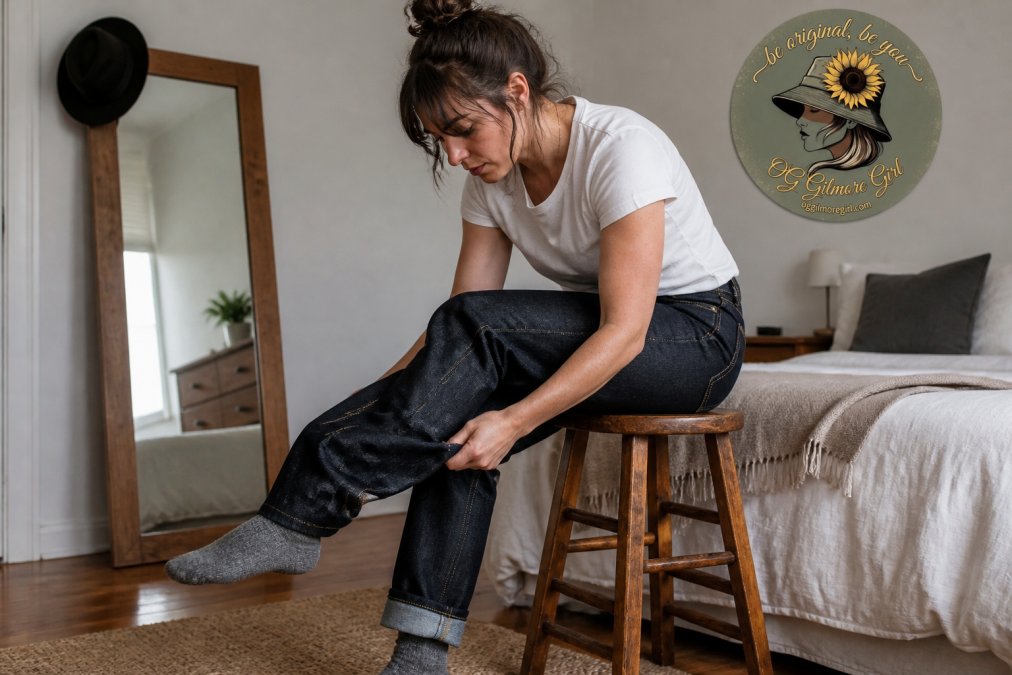
The raw denim break-in process takes roughly 30 to 90 days of regular wear, and the first week is genuinely uncomfortable, stiff fabric, a digging waistband, and sitting down feels like a small negotiation.
Infographic illustrating the 30-day break-in process for stiff raw denim jeans through daily wear and creasing.
Pro TipWear your raw denim for short stretches at first, two to three hours at a time. This lets the fabric conform to your movement patterns gradually instead of forcing it, which is how you get sharp, natural fades rather than random ones.
How to Shorten the Break-In Without Ruining Your Jeans
A common mistake is trying to fast-forward the process with heat or excessive wear.
How to Wash Raw Denim Without Losing Your Fades
Wash raw denim sparingly, inside out, in cold water, and hang it to dry.
The Actual Wash Protocol
The sequence most experienced wearers settle into:
Turn jeans inside out and zip or button them so the fly doesn't twist.
Use cold water only, hot water accelerates indigo loss and shrinkage, especially on unsanforized pairs.
Choose a gentle, pH-neutral detergent. Woolite Dark, Dr. Bronner's Sal Suds, or a dedicated denim wash all work. Skip anything with bleach, brighteners, or enzymes.
Skip fabric softener entirely. It coats the cotton fibers and interferes with how the denim creases and fades.
Wash on a gentle or hand-wash cycle, or by hand in a bathtub. Skip the spin cycle if your machine allows it, high-speed spinning sets hard creases that can look like damage.
Hang dry away from direct sun. Sun exposure fades indigo unevenly and can dry out the cotton; a shaded indoor line or drying rack is ideal.
Expect crocking. That's the indigo transfer on your hands, furniture, and white sneakers during the first few weeks and after each wash. It's normal and fades with time.
How Often Should You Actually Wash?
First wash: somewhere between 60 and 180 days of regular wear, depending on how often you wear them and how much you sweat.
After that: every 30 to 60 wears, or whenever they smell or feel soiled.
Spot-clean between washes: a damp cloth on a stain, or a short soak in cold water with a capful of gentle detergent, handles most small messes without resetting your fades.
Troubleshooting: What to Do When You Mess Up
You washed too soon and lost contrast. Not a disaster.
Pro TipIf you're nervous about your first wash, do a test soak on a small, hidden area like the inside of the hem. You'll see how much indigo releases and how the fabric responds before committing the whole pair.
Watch OutNever put raw denim in the dryer, even on low. The heat sets uneven shrinkage, warps the leg twist, and can permanently stiffen the fabric. Air-dry only.
The Sustainability Angle
Here's something most fade-focused guides ignore: how you wash matters as much as how often.
Raw Denim vs Washed Denim: Which One Fits Your Actual Life?
Raw denim vs washed denim comes down to one question: do you want your jeans to look the same every time you put them on, or change with you?
Factor
Raw Denim
Washed Denim
Initial feel
Stiff, structured
Soft, broken-in
Fade pattern
Unique to you
Pre-set by factory
Maintenance
Minimal washing
Standard care
Shrinkage risk
Higher if unsanforized
Minimal
Best for
Patient wearers
Low-effort wardrobes
Sizing, Fit, and Body Type: Where Beginners Get Burned
Sizing is where most beginners get burned: raw denim behaves differently depending on whether it's sanforized.
Watch OutBuying unsanforized raw denim in your exact washed-jeans size is the single most common beginner mistake. After the first soak, those jeans can become unwearable, and there's no fixing a pair that shrank two sizes.
The Real Cost of Raw Denim (and Cheaper Ways In)
Raw denim costs more upfront than fast-fashion denim, but the cost-per-wear math often favors it: a well-made pair can last years with basic care, while cheap denim loses shape and develops holes within a season or two.
The Three Price Tiers, Roughly
Entry tier (roughly $80-$150): This is where beginners should start. You'll find sanforized selvedge from Japanese and American mills, often in the 12-14 oz range. Construction is solid, fades are real, and the break-in is manageable, usually in straightforward straight and slim-tapered cuts.
Mid tier (roughly $150-$300): Better hardware (copper rivets, heavier pocket bags), more interesting fabrics (slubby, nep, or unsanforized), and more cut options. This is where most enthusiasts settle after their first pair.
Luxury tier ($300 and up): Small-batch mills, natural indigo, hand-finished details, and limited runs. The fades aren't dramatically better than mid-tier, you're paying for rarity, craft, and provenance.
What Actually Drives the Price
Fabric origin and weight. Japanese selvedge from Okayama mills carries a premium over generic selvedge. Heavier weights (16 oz and up) cost more to weave and sew.
Construction details. Chain-stitched hems, hidden rivets, and selvedge on the coin pocket and fly add labor.
Dye method. Natural indigo, rope-dyed vs. hank-dyed, and the number of dips all affect cost and fade character.
Brand and distribution. Direct-to-consumer brands cut out retail markup; heritage brands with wholesale networks don't.
Cheaper Ways In
Buy sanforized selvedge in the 12-14 oz range. Lighter weights break in faster and are more forgiving than 16 oz-plus fabric, which feels like cardboard for the first month.
Choose a straight-leg or relaxed-tapered cut. These are the most forgiving fits across body types and the easiest to size without a fitting room.
Buy direct from the maker. Direct-to-consumer brands skip retail markup, so a $120 pair can match a $200 department-store pair on construction.
Watch for end-of-season sales and deadstock drops. Last year's cut in an unpopular wash is often 30-50% off and fades identically.
Consider a lighter-weight unsanforized pair for the old-school experience cheaply. You'll do the shrink math yourself, but the fabric cost is often lower.
The Sustainability Case
The environmental argument for raw denim is real.
Key TakeawayThe cheapest way into raw denim isn't a discount pair, it's the right pair. Entry-tier sanforized selvedge in a straight cut, bought direct from the maker, gives you 90% of the experience at 30% of the luxury price.
Common Beginner Mistakes and How to Avoid Them
The biggest beginner mistake is treating raw denim like regular jeans.
Frequently Asked Questions
Is raw denim actually better than standard store-bought jeans?
It depends on what you want. Raw denim uses unwashed fabric, so it holds its shape longer and develops fades specific to how you move. Store-bought washed denim is softer on day one and needs no break-in. If you want a pair that molds to your body over months, raw denim delivers that. If you want zero effort, washed denim wins. Neither is objectively better; they solve different problems.
How uncomfortable is raw denim during the initial break-in period?
The first week is the hardest. Expect stiffness at the waist and knees, some rubbing at the hips, and limited stretch when you sit. Most people notice real softening by day 10 to 14 of regular wear, and full comfort around the one-month mark. Buying a sanforized pair and sizing up one inch at the waist cuts most of the early discomfort without hurting the final fit.
Do you really need to wait six months to wash raw denim?
No. The six-month rule is a fading-culture guideline, not a hygiene requirement. If your jeans smell or feel grimy, wash them. Cold water, inside out, hang dry. You will lose a little indigo contrast, but you will not ruin the denim. Beginners who wear raw denim daily in warm weather should wash closer to every six to eight weeks.
Should you soak raw denim before the first wear?
Soak unsanforized raw denim before wearing it, because that fabric shrinks up to 2 inches at the waist and 2 to 3 inches in length. Sanforized raw denim is pre-shrunk and does not need a soak. Check the product listing before you buy. If it says shrink-to-fit or unsanforized, give it a 30 to 60 minute cold soak and let it air dry before your first wear.
Is raw denim worth it if you don't care about fades?
Yes, for different reasons. Raw denim typically uses heavier fabric, often 12 to 16 oz, which holds structure better than thin washed denim and resists sagging at the knees and seat. That means a straighter silhouette for longer. If you want a pair of straight leg jeans that keeps its shape through a full workday, the fabric weight alone can justify the price.
Raw denim rewards patience, and that's exactly why it intimidates beginners. If the break-in period feels like too much commitment, OG Gilmore Girl makes it easy to get the same effortless denim look without the wait, with a curated selection of trusted brands, 15% off your first order, free shipping on orders over $100, and G-Bucks rewards on every purchase. Shop now and find the denim that fits your life.
Learn how to price clothing boutique items using markup formulas, cost calculations, and market research. Step-by-step pricing strategy for retail success.
Discover the best professional footwear to pair with shirt dresses. From ankle boots to flats, find comfortable office shoes that elevate your work style.
Discover the real benefits of investing in boutique clothing, from better quality to lower cost per wear. Learn how to spot well-made pieces that last.
Discover eco friendly loungewear brands for women that prioritize sustainable materials and ethical production. Shop comfortable, stylish options today.
Affordable matching lounge sets for petite women: Shop affordable matching lounge sets designed for petite women. Find cozy, stylish options with proper.
Casual vs cocktail dress codes explained: what to wear to each, key differences, and how to nail wedding guest attire. Get the guide and shop the look.
Discover the quiet luxury trend in 2026: timeless style, intentional consumption, and effortless elegance. Learn how to build your curated wardrobe today.
Dress up loungewear for work: Master the art of dressing up loungewear for work. Learn styling tricks, fabric choices, and layering techniques to look.
Learn how to style simple dresses for beginners with easy tips on accessories, layering, and capsule wardrobe essentials. Discover effortless looks today.
Learn how to mix and match different denim styles with confidence. Master washes, textures, and fits for a polished denim-on-denim look. Start styling.
Learn how to wear casual dresses to a wedding with confidence. Get styling tips, dress code guidance, and outfit ideas for every venue and season. Shop.
Find the best everyday dress fabrics for comfort, breathability, and easy care. Compare cotton, linen, rayon, and blends, then shop styles you'll love.
Dad jeans vs mom jeans: learn the real difference in rise, leg shape, and fit, plus styling tips for each. Find your perfect pair and shop with confidence.
Learn how to wear wide leg jeans for pear shape in 2026 with fit tips, styling tricks, and denim picks that balance hips and define your waist. Shop now.
Swap your jeans for casual dress alternatives that feel just as easy. Explore comfy pants, midi skirts, and dresses to refresh your everyday look. Shop.
Clothing sizes vary by brand due to vanity sizing, fit models, and no universal standards. Learn how to read size charts and measure yourself accurately.
Midi dress vs maxi dress for petite women: compare hemlines, silhouettes, and styling tricks to find the most flattering fit. Discover your perfect length.
Find spring dress alternatives to expensive designer styles for 2026. Shop affordable boutique picks that match runway trends without the luxury price tag.
Super cute and soft but so long on my 5ft frame and rip on inseam:(
Everything was done to make the issue right. A free return and refund was offered and declined. We offered to pay for the seamstress to fix the tear. A 40% discount was also given for a future purchase for the inconvenience.