Your cart is empty
Tax included and shipping calculated at checkout
Menú de cajones
Tax included and shipping calculated at checkout

Last Updated: October 13, 2026
The benefits of investing in boutique clothing come down to three things: better construction, a smaller environmental footprint, and a wardrobe you actually reach for. At OG Gilmore Girl, we hear the same hesitation from shoppers who have been burned by fast fashion before, and it is a fair one. Cheap clothes are cheap for a reason, and the cost shows up later.
Here is the core idea behind this whole article: boutique clothing is not expensive clothing. It is clothing priced for how many times you will wear it. A dress you wear twice costs more per outing than a jacket you wear for three seasons.
Below, we break down what actually changes when you switch, how to spot quality before you buy, and how to build a closet that earns its space. The math is more forgiving than most shoppers expect.
The biggest shift is not the price tag. It is how often you wear what you own.
Fast fashion is built around speed. New drops arrive weekly, trends cycle fast, and garments are made to hit a price point rather than survive a season. That model works if you enjoy constant novelty. It falls apart if you want clothes that still look good in two years.
Boutique clothing works on a different rhythm. Smaller runs, fewer pieces, more attention per garment. You get:
The trade-off is real. Boutique shopping means fewer options at any given moment. If you like browsing hundreds of near-identical tops, this will feel restrictive.
Quality is checkable, and you can do it in about 30 seconds. Most shoppers never look past the label, which is exactly why so much poorly made clothing gets bought.
Run these checks before anything goes in your cart.
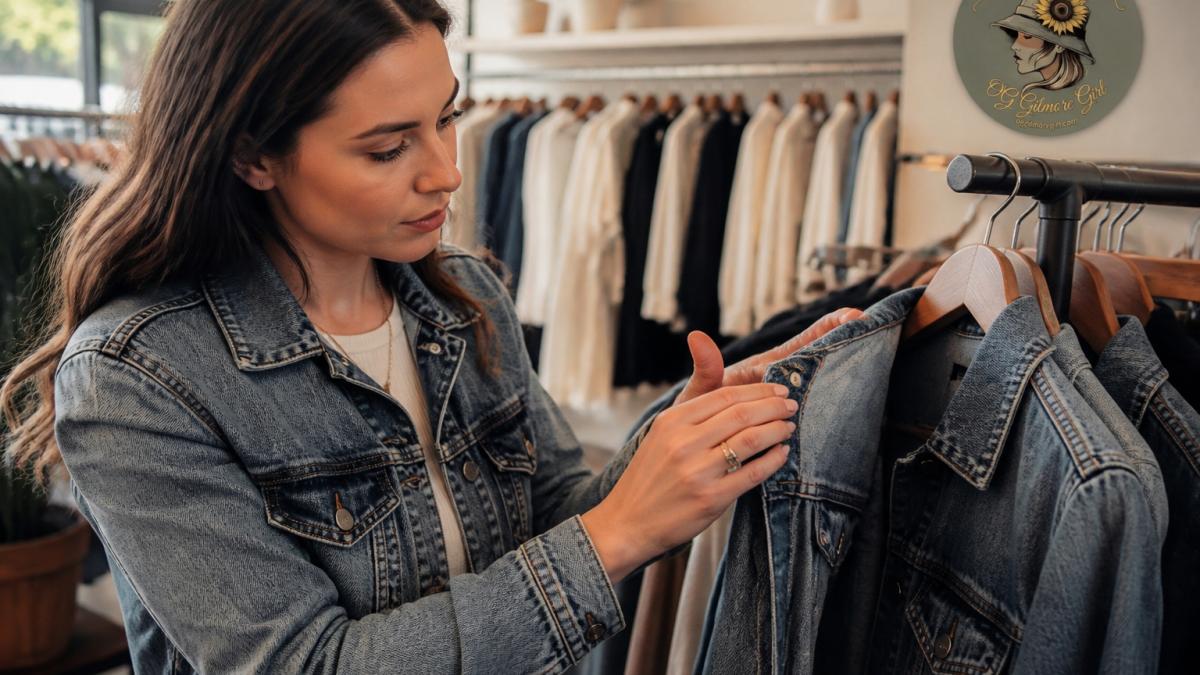
Start at the seams. Turn the garment inside out and look at how the edges are finished.
A common mistake is checking only the outside. The inside tells you everything about how the piece was made.
Pick the garment up. If it feels thin enough to see light through it, it will not hold its shape.
Hold a section in your hand and let it drop. Fabric with body falls cleanly. Fabric with too much synthetic content tends to cling, pill, or sag. Stretch a small section and release it: good fabric snaps back, poor fabric stays stretched.
For denim specifically, weight and weave matter more than any label claim. A pair of jeans that feels substantial in your hands will outlast a lighter pair every time. Our Vintage Denim Eco Pant is a good example of what to feel for, handcrafted from recycled vintage American denim with an elastic waist for an easy, relaxed fit.

Cost per wear is the price of a garment divided by how many times you actually wear it. That single number explains why a cheaper item often costs more.
Here is how it plays out:
| Garment | Price | Times Worn | Cost Per Wear |
|---|---|---|---|
| Fast fashion top | $15 | 4 | $3.75 |
| Boutique top | $38 | 40 | $0.95 |
| Fast fashion jeans | $30 | 6 | $5.00 |
| Boutique jeans | $74 | 60 | $1.23 |
The boutique piece wins every time, and it is not close. The catch is that cost per wear only works if you actually wear the item.
Vintage Denim Eco Pant | Recycled American Denim →
That is where most wardrobes fail. People buy things they like in the store and never wear at home. A garment worn once has a terrible cost per wear no matter how little you paid.
So the useful question is not "is this worth the price?" It is "will I wear this at least twenty times?" If the answer is genuinely yes, the math takes care of itself.
Walking into a room and seeing your exact outfit on someone else is a specific kind of disappointment. Fast fashion makes that likely by design, since millions of units of the same garment ship nationwide.
Boutique clothing solves this structurally. Smaller production runs mean fewer copies exist. One-of-a-kind pieces go further still.
Consider what that looks like in practice. A Large Up-Cycled Flannel is hand-bleached and pre-loved, so no two are alike. The Judy Blue Crocheted Patch Wide Leg Jean pairs a high-waisted wide leg cut with delicate crocheted patches you will not find on a mass-market pair.


Accessories carry the same advantage. A statement piece like the Omala Bold Brash Necklace turns a plain tee into something intentional, and it costs less than a fast fashion haul you would forget by next month.
The point is not to be loud. It is to look like yourself rather than like a catalog page.
A wardrobe that works is built backward from your actual week, not forward from what is trending.
Start by tracking what you reach for. For two weeks, note every garment you wear. Most people find they rotate through a small fraction of what they own. That gap is where money goes to die.
Then rebuild around it:
The 15% off your first order at OG Gilmore Girl makes that first test purchase easier, and free shipping on orders over $100 means you can try a few pieces without padding the total with filler. G-Bucks earned on each order add up toward the next piece.
The hard part is not knowing that better clothing lasts longer. It is trusting a new brand enough to spend more than you would on a fast fashion impulse buy. That is a reasonable worry, and the answer is to start small: one piece, worn often, judged on how it holds up.
OG Gilmore Girl curates trendy apparel from trusted brands so you are not gambling on unknown quality. You get 15% off your first order, free shipping on orders over $100, and G-Bucks on every purchase through our loyalty program. Shop now and start building the wardrobe that finally gets worn.
In most cases, yes. Boutique clothing is often made in smaller batches with closer attention to stitching, fabric weight, and finishing details. Fast fashion prioritizes speed and volume, which can mean thinner fabrics and looser construction. That said, quality varies across boutiques too, so always check seams, hardware, and fabric feel before buying. A well-made boutique piece like a handcrafted denim jacket or a pair of Judy Blue jeans typically holds its shape and color far longer than a comparable fast-fashion item.
Divide the purchase price by the number of times you realistically expect to wear the item. A $74 pair of Judy Blue wide leg jeans worn twice a week for a year works out to roughly $0.71 per wear. A $20 fast-fashion top worn three times before it pills or loses shape costs about $6.67 per wear. Cost per wear clothing math almost always favors pieces that are better made and that you actually enjoy wearing, which is the core argument for investing in boutique clothing.
Start with the fabric: hold it up to light, stretch it gently, and check whether it springs back. Then flip the garment inside out and look at the seams. Clean, tight stitching with no loose threads signals careful construction. Check buttons, zippers, and hardware for weight and smooth operation. Finally, ask yourself whether the piece works with at least three outfits you already own. Boutique clothing is an investment, so each purchase should earn its place in your rotation.
Boutique clothing typically comes in smaller runs, so you are far less likely to see five other people wearing the same piece at a party. Many boutiques carry one-of-a-kind or limited-quantity items, like upcycled flannels or handcrafted jewelry, that simply are not mass-produced. That scarcity is part of what makes boutique clothing feel personal. You are not buying whatever a big retailer decided millions of people should wear this month. You are choosing something that reflects your own style.


