Your cart is empty
Tax included and shipping calculated at checkout

Menú de cajones
Tax included and shipping calculated at checkout

Last Updated: October 17, 2026
Building a versatile wardrobe budget starts with knowing what you already have. Before you spend a single dollar, take inventory. You might discover hidden gems you forgot about, pieces that actually work together, and gaps that need filling.
Open your closet and be honest. Pull out everything you've worn in the past three months. Set aside items that don't fit, don't flatter, or don't match your lifestyle anymore.
Look for patterns:
This audit takes 30 minutes but saves you hundreds in unnecessary purchases. You'll see exactly which pieces work hard and which ones just take up space. That's your foundation.
Be realistic about what you can spend. A versatile wardrobe on a budget doesn't happen overnight, and that's okay.
Try this approach:
Spread your spending across 3-6 months if possible. Buying one or two quality pieces per month beats impulse-shopping your entire budget at once. You'll make better choices and avoid duplicates.
Your style isn't about trends. It's about what makes you feel confident and what actually fits your life.
Ask yourself these questions:
Your lifestyle dictates what you need. A corporate professional needs different pieces than someone working from home. Someone in a warm climate can't build the same wardrobe as someone facing four seasons.
Write down three words that describe your style: classic, edgy, sporty, feminine, minimalist, whatever resonates. Use these words as a filter for every purchase.
A limited color palette is your secret weapon for a versatile wardrobe on a budget. When everything coordinates, every piece works with everything else.
Choose two neutral base colors:
Add two accent colors:
Stick to these five colors for your core pieces. Accessories and one or two statement items can break the rules, but your basics should stay cohesive.
Budget wardrobe essentials you need:
These seven pieces cost between $150-300 if you shop strategically. They're your foundation.
A capsule wardrobe is a small collection of versatile pieces that mix and match endlessly. You don't need 50 items. Thirty well-chosen pieces can create dozens of outfits.
Start here. These pieces do the heavy lifting.
Bottoms:
Tops:
The American Apparel sizing guide emphasizes that fit matters more than price. A $15 tee that fits perfectly beats a $40 tee that doesn't.
At OG Gilmore Girl, we recommend starting with our Classic Crew Neck Short Sleeve Tee at $10.

For jeans, our Denim Straight Leg Jeans at $35 offer that vintage-inspired fit that works with everything from tees to blazers.

Layering pieces are outfit multipliers. One blazer or cardigan transforms a basic tee into five different looks.
Essential layering pieces:
Our Black Corduroy Jacket at $55 is exactly this. Wear it over a tee for casual, throw it on a dress for polished, layer it under a sweater for extra warmth. The washed corduroy softens with wear, so it only gets better.
Shoes anchor an outfit. You don't need many, but the ones you choose matter.
Essential shoes:
Start with our Classic Black Sneakers at $20. The canvas and white sole pair with literally everything: jeans, dresses, trousers, skirts. They're the workhorse shoe.

For accessories, focus on function:
Accessories cost less than clothing but change how outfits feel. A scarf elevates a basic tee. A belt defines a dress.
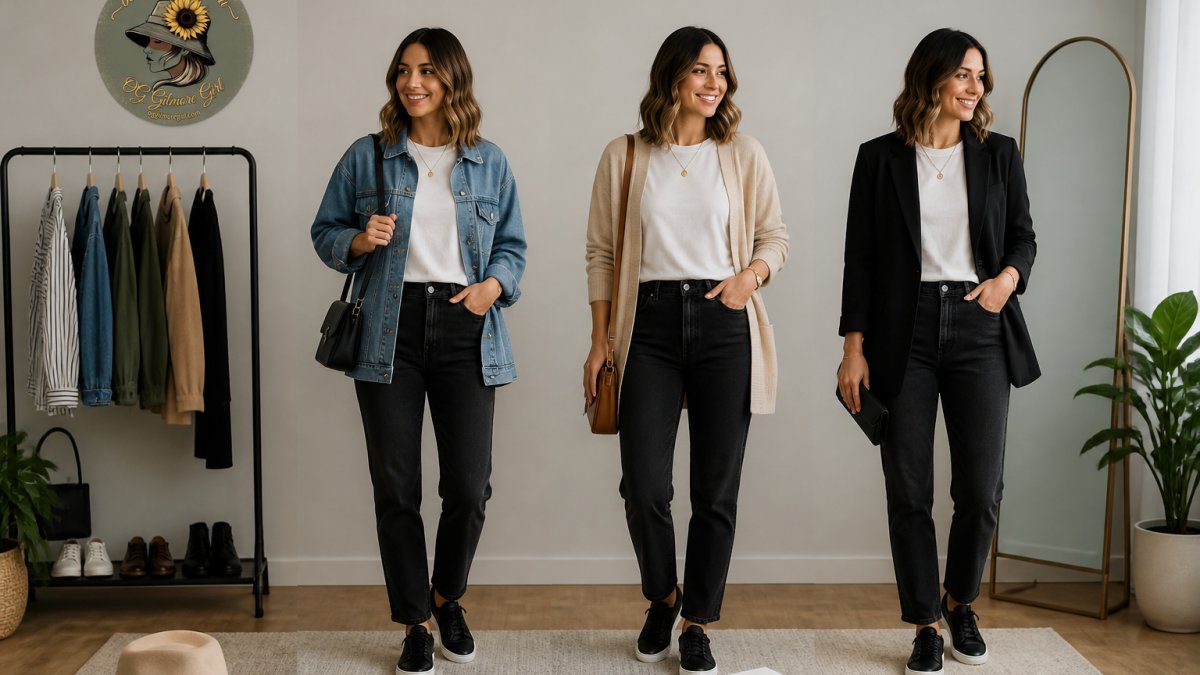
The magic of a versatile wardrobe budget is simple math. If every piece works with most other pieces, the outfit combinations multiply.
Here's the framework:
Outfit 1: Black jeans + white tee + black sneakers + corduroy jacket Outfit 2: Black jeans + white tee + black sneakers + blazer + scarf Outfit 3: Trousers + white tee + flats + cardigan Outfit 4: Jeans + button-up shirt + boots + blazer
Same core pieces. Five completely different looks. That's the power of a cohesive color palette and versatile basics.
Cost-per-wear is the metric that separates smart purchases from regrets. It's simple: divide the price by the number of times you'll actually wear it.
A $100 blazer worn 100 times costs $1 per wear. A $30 trend piece worn twice costs $15 per wear.
When you're building a budget wardrobe, prioritize pieces with low cost-per-wear:
This mindset shifts how you shop. You stop asking "Is it cheap?" and start asking "Will I actually wear this?" That's when your budget starts working for you.
Take your basics and play with them. Mix your white tee with different bottoms:
Add one layering piece and everything changes again. A cardigan softens the look. A blazer sharpens it. A corduroy jacket adds texture.
The goal is to create at least 10 different outfits from 15-20 pieces. If you can't, you have too many single-use items. Swap them out.
Seasonal dressing on a budget means choosing pieces that work across seasons rather than buying separate wardrobes.
Spring and Fall: These seasons are your sweet spot. Layering pieces (cardigans, blazers, jackets) do all the work.
Summer: Add lightweight pieces:
Winter: Layer heavier:
The key is buying pieces that work in multiple seasons. A black cardigan works in spring, fall, and winter. A neutral blazer transitions all year.
Secondhand shopping and strategic sales are where a tight budget becomes a superpower. You can buy higher-quality pieces for less.
Secondhand options:
Look for natural fabrics: cotton, linen, wool, silk. These hold up better than synthetics. Check seams, zippers, and hems.
Strategic sales timing:
Don't wait for sales to buy basics. Buy them year-round at regular prices. Save sales for items you love but didn't plan to buy.
The biggest mistake in building a budget wardrobe is buying cheap quantity instead of investing in quality basics.
Quality signals to look for:
Fit matters more than size.
Durability extends the life of your budget.
When you shop at OG Gilmore Girl, you're choosing pieces built to last. The Textile Exchange sustainability report notes that investing in durable pieces reduces overall consumption and waste.
Care extends durability. Wash in cold water. Air dry when possible. Repair small issues before they become big ones.
Building a versatile wardrobe on a budget is about making intentional choices.
Start by auditing your current closet to identify gaps and duplicates. Set a realistic monthly budget ($50-$150 is a solid starting point) and commit to a 3-6 month timeline rather than buying everything at once. Define your personal style and lifestyle needs first, then choose a color palette of 3-4 neutral base colors plus 1-2 accent colors. This prevents impulse purchases and ensures new pieces work with what you already own. Focus on quality basics over trendy pieces, a $35 pair of denim that lasts two years costs less per wear than a $20 pair that falls apart in six months.
Prioritize pieces that work across multiple seasons and outfit combinations: well-fitting jeans (like our Denim Straight Leg Jeans at $35), a classic white crew neck tee ($10), a neutral blazer or corduroy jacket ($55), black sneakers ($20), and a cardigan or sweater. These six items form the foundation of a capsule wardrobe on a budget and can create 20+ outfit combinations. Add layering pieces next, then invest in one quality dress and neutral accessories. Avoid trendy items that work with only one outfit, every piece should earn its space by mixing with at least three other items in your closet.
Use the cost-per-wear calculation: divide the price by how many times you'll realistically wear it in a year. A $55 jacket worn twice weekly (100+ times per year) costs about $0.55 per wear; a $20 trendy top worn three times costs $6.67 per wear. Aim for pieces under $1 per wear for basics. Also check: Does it fit your body without alterations? Does it match your color palette? Does it work with at least three other items you own? If you answer 'no' to any of these, skip it, no matter how cheap it is.
Yes, with wardrobe planning for all seasons. Choose seasonless basics in neutral colors: quality denim, crew neck tees, and layering pieces like cardigans and jackets work in spring, summer, fall, and winter. Swap lightweight fabrics for heavier ones within the same color palette (linen tee in summer, cotton tee in winter). Layer strategically, a black corduroy jacket transforms a summer dress into a fall outfit. Invest in one or two pieces per season (a lightweight blazer for summer, a heavier sweater for winter) rather than a full seasonal overhaul. This approach keeps your budget focused and your closet cohesive.


