• Publicado el

How to Measure Rise for Perfect Fitting Pants

How to Measure Rise for Perfect Fitting Pants

Last Updated: October 29, 2026

Quick Summary

To measure rise, lay a well-fitting pair of pants flat and run a flexible tape from the top of the waistband at center front down to the crotch point, then repeat at center back. Rise is the vertical distance from the crotch point to the waistband, and measuring both front and back helps you compare fit across brands.

  • Measure front rise at center front and back rise at center back, both to the crotch point.
  • Keep the tape flat and follow the seam without pulling it tight.
  • Back rise usually runs 2 to 4 inches longer than front rise on a good fit.
  • Measure the same pair on two different days to check your technique is consistent.

Table of Contents

What Rise Measurement Means and Why It Matters

Rise is the vertical distance from the crotch point to the top edge of the waistband. Get this number right and pants sit where they should. Get it wrong and you fight gaping at the back, digging at the front, or a waistband that rolls down all day.

Most shoppers focus on waist size and length. Rise matters just as much. Two pairs labeled the same size can sit completely differently on the body because their rise differs.

Measuring rise gives you a number you can compare across brands. Fit depends heavily on this one measurement, so it is worth learning before you shop.

  • Waist size tells you where pants sit around your middle
  • Inseam tells you leg length
  • Rise tells you how the pants sit between those two points

Tools You Need to Measure Rise

You need very little to measure rise at home:

  • A flexible tape measure (cloth or vinyl, not a metal ruler)
  • A pair of pants that already fit well
  • A pen and paper or your phone's notes app
  • A second person, if you want an easier time measuring your own body

Keep the tape flat against your body. Do not pull it tight, or the number will come out short.

Front Rise vs Back Rise: What Each Measurement Tells You

Front rise runs from the waistband to the crotch point at the front. It shows how high the pants sit against your stomach.

Back rise runs from the waistband to the crotch point at the back. It shows how well the pants cover your seat.

Watch out: a pair with a short front rise can pull at the stomach when you sit, while a short back rise can leave your lower back exposed. Measure both if you can.

High Rise vs Mid Rise vs Low Rise: Choosing the Right Height

Rise categories describe where the waistband lands on your body:

  • High rise sits at or near your natural waistline
  • Mid rise sits a little below the natural waist, around the hip bone
  • Low rise sits on the hip, below the navel

Pick the category that matches how you want pants to feel. High rise suits shoppers who like a defined waist. Mid rise works well for everyday wear. Low rise suits a relaxed, casual look.

If you want a high rise skinny jean, our KanCan Black High Rise Skinny Jeans sit at the natural waistline.

KanCan Black High Rise Skinny Jeans

How to Measure Rise on a Pair of Pants You Already Own

This is the method to use when you have a pair that fits well and want to clone the fit.
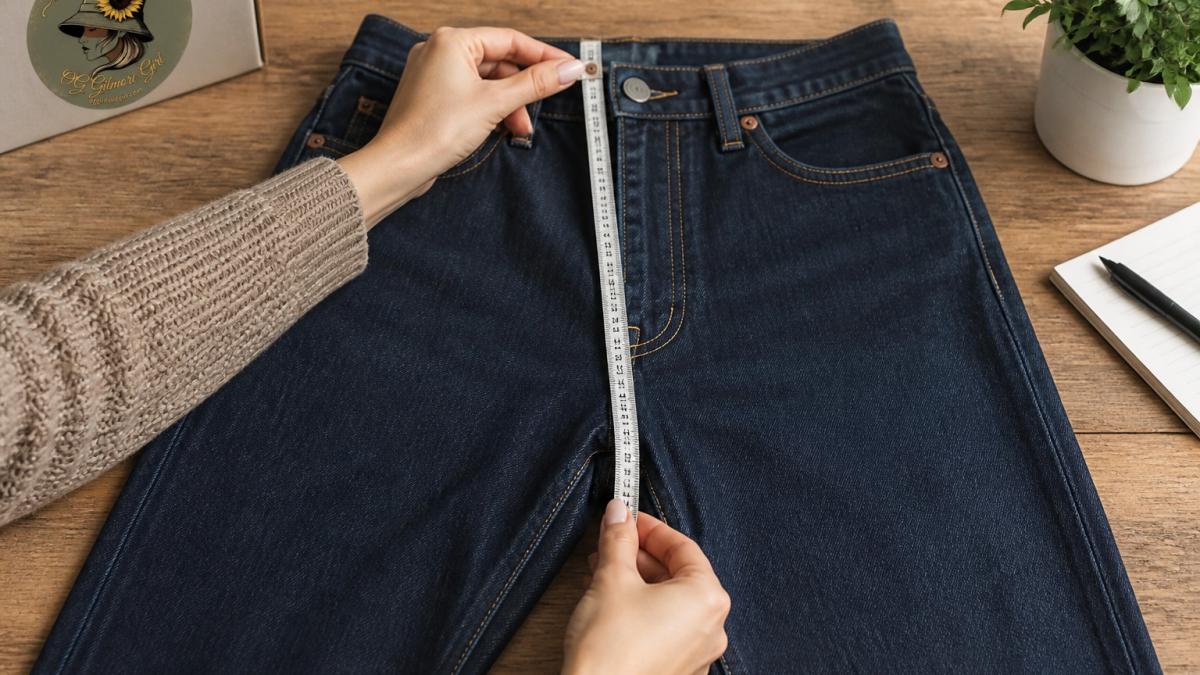
Diagram showing how to measure rise by placing a tape from the crotch seam to the top of the waistband.

Measure front rise.

  1. Lay the pants flat on a table, front side up, zipper closed and button fastened.
  2. Smooth the fabric from the waistband down to the crotch so there are no folds or puckers. Do not stretch the fabric, let it relax.
  3. Place the zero end of the tape at the top edge of the waistband at center front, right at the seam line, not at the top of the folded-over waistband.
  4. Run the tape straight down the center front seam to the crotch point. Keep the tape flat and follow the seam, not the curve of the fabric.
  5. Read the number at the crotch point. That is your front rise.

Measure back rise.

  1. Flip the pants over, back side up, and smooth them flat again.
  2. Place the tape at the top edge of the waistband at center back.
  3. Run it down the center back seam to the same crotch point.
  4. Read the number. That is your back rise.

Compare front and back before you shop. A pair that fits well usually has a back rise 2 to 4 inches longer than the front rise. If a new pair lists a back rise that is only 1 inch longer than the front, expect it to pull down at the seat when you sit. If the back rise is 5 or more inches longer, expect extra fabric to billow at the lower back.

Adjust the number for fabric. A rigid pair and a stretch pair can read differently once the fabric relaxes in wear, so compare measurements with that in mind.

Key Takeaway Measure the same well-fitting pair twice on different days. If your two readings differ by more than 0.25 inch, your smoothing technique is inconsistent, slow down and let the fabric relax fully before you read the tape.

Troubleshoot the common snags.

  • Seams will not lie flat: the pants may have a twisted leg or a worn crotch. Press the crotch area with a warm iron (no steam on denim) and re-lay them.
  • Waistband is curved or elastic: measure to the seam where the waistband attaches to the body of the pant, not the top of the elastic. Elastic waistbands distort the reading.
  • Pants are lined or have a gusset: measure to the seam junction anyway. A gusset adds fabric but does not move the crotch point.
  • You only have one pair and it fits poorly: measure it anyway, then compare to your body measurement from the previous section. The difference tells you whether you need more or less rise.

Once you have both numbers, compare them to the listed measurements on any new pair you are considering.

Skinny Fit Jeans →

Measuring a pair that already fits well gives you a reference you can compare against any new pair, step by step.

Step What to do Time or frequency
Locate crotch point Find where front rise, back rise and inseam seams meet Before every measurement
Measure front rise Waistband at center front down to crotch point Once per garment
Measure back rise Waistband at center back down to crotch point Once per garment
Compare front and back Back rise usually 2 to 4 inches longer than front Before shopping
Repeat check Re-measure on a different day Within 0.25 inch

How to Measure Your Own Rise and Inseam

Measuring your own body is the harder of the two methods because you cannot see the crotch point while you work. The trick is to build a repeatable reference point instead of guessing. Most tailors and pattern drafters use a plumb line and a hard chair to lock the number down.

Find your crotch point first. Sit upright on a hard, flat chair with your feet flat on the floor and your knees at roughly a 90-degree angle.

Measure front rise with a plumb line.

  1. Tie a string or a piece of elastic around your natural waistline, the narrowest part of your torso, usually just above the navel. Keep it level all the way around; a mirror helps.
  2. Hang a small weight (a washered key, a metal nut, a plumb bob) from the center front of the string so it drops straight down.
  3. Measure from the string at center front straight down to the crotch point you marked. Hold the tape vertical, not against the curve of your body. That vertical distance is your front rise.
  4. Repeat at center back. The back rise is almost always longer than the front rise, commonly 2 to 4 inches longer on adult bodies, because the seat needs more fabric to cover.
Pro Tip Measure over the underwear or pants you plan to wear with the new pair. Thin leggings and thick denim can shift your rise number by a half inch or more.

Measure inseam without help.

  1. Stand with your back against a wall and your feet about 6 inches apart.
  2. Place a book or a flat ruler between your legs, spine up, and slide it up until the top edge touches your crotch point. Keep the book level.
  3. Mark the wall at the top edge of the book, then measure from that mark straight down to the floor. That is your inseam.
  4. For a finished pant length, subtract about 0.5 inch for a slight break at the shoe, or 1 inch for a full break.

Adjust for fabric stretch. This is the step most guides skip. A rigid 100% cotton denim needs a rise that matches your body measurement almost exactly, because it will not give.

Measure twice, and measure at the same time of day. Body shape shifts through the day with posture and bloating. A morning measurement and an evening measurement can differ by a half inch. Pick one time and stick to it so your numbers stay comparable across brands.

Watch Out Do not pull the tape tight against your body. A snug tape reads short and will send you into a pair that digs at the crotch. The tape should touch the body without compressing it.

Write down four numbers: front rise, back rise, inseam, and the date you measured.

Using Your Measurements to Shop with Confidence at OG Gilmore Girl

With your rise and inseam numbers in hand, shopping gets easier.

Our Denim Straight Leg Jeans have a high waisted fit and are a good option if you want a high rise style with your measurements in mind.

Denim Straight Leg Jeans

Our Skinny Fit Jeans are made with high stretch volume fabric and feature a fringe detail for an edgy finish.

Skinny Fit Jeans
Skinny Fit Jeans

For frequently asked questions about rise, see the questions below, and remember that fit varies from one brand to another, so always check the listed measurements.

Frequently Asked Questions

What is rise in pants? Rise is the distance from the crotch point to the top of the waistband.

How do I know if my rise is high, mid, or low? Compare your measured rise with the rise of pants you already like.

Can I use my measurements for every brand? Your measurements give you a starting point, but sizing differs between brands.

Frequently Asked Questions

Where is rise measured on jeans?

Rise is measured from the crotch seam, the point where the inseam and outseam meet at the bottom of the crotch, up to the top edge of the waistband. On a flat pair of pants, lay them on a table, fold them in half lengthwise, and measure with a tape measure along the center seam. Front rise is measured to the top of the front waistband, and back rise is measured to the top of the back waistband. Measuring both helps you see how the pants will sit on your body.

What is the difference between front rise and back rise?

Front rise is the distance from the crotch point to the top of the front waistband. Back rise is the distance from the crotch point to the top of the back waistband. Back rise is usually longer because it has to cover the curve of the seat. If your back rise is too short, pants can pull down in the back when you sit. If it is too long, you may feel extra fabric bunching at the back of the waist.

How high up should high waisted pants be?

High waisted pants typically sit at or slightly above your natural waistline, the narrowest point of your torso, usually about an inch or two above your belly button. Mid rise sits closer to the belly button, and low rise sits on the hips. Compare the rise measurement of a pair you already like with the measurements of new pants before buying. If you are between sizes, a higher rise on the shopping listing usually means more coverage at the waist.

How do I know if I need a long or short rise?

Stand in a pair of pants you like and check where the waistband lands compared to your natural waistline. If the waistband sits well below your natural waist and the crotch feels tight, you likely need a longer rise. If the waistband rides up past your natural waist and the crotch feels loose or sags, a shorter rise is probably a better fit. Sitting down in the pants is the best test, since rise problems often show up only when you sit.

Deja un comentario

Tenga en cuenta que los comentarios deben ser aprobados antes de su publicación.

Leer también

Ver todo Chismorreo original de las Gilmore Girls
How to Choose Loungewear for Your Body Type?
  • Publicado el
How to Choose Loungewear for Your Body Type?
Find your loungewear body type and the cuts, lengths and fabrics that balance your proportions. A practical guide to comfortable, flattering lounge sets.
7 Denim Skirt Outfits You Can Wear All Year
  • Publicado el
7 Denim Skirt Outfits You Can Wear All Year
Style a denim skirt in every season with outfit formulas for mini, midi and maxi lengths. See year-round looks that work from winter to summer.
What to Wear With Distressed Denim Shorts
  • Publicado el
What to Wear With Distressed Denim Shorts
Style distressed denim shorts for any occasion. Learn outfit formulas, top and shoe pairings, and how to dress them up or down with confidence.
Best Shoes to Wear With Flared Bottom Tops
  • Publicado el
Best Shoes to Wear With Flared Bottom Tops
Discover the best shoes to pair with flared bottom tops. From flats to boots, find outfit ideas that balance your silhouette and elevate your style.
How to Price Items for a Clothing Boutique
  • Publicado el
How to Price Items for a Clothing Boutique
Learn how to price clothing boutique items using markup formulas, cost calculations, and market research. Step-by-step pricing strategy for retail success.
Benefits of Investing in Boutique Clothing
  • Publicado el
Benefits of Investing in Boutique Clothing
Discover the real benefits of investing in boutique clothing, from better quality to lower cost per wear. Learn how to spot well-made pieces that last.
Steps to Take After an Online Shopping Scam
  • Publicado el
Steps to Take After an Online Shopping Scam
Got scammed online? Here's exactly what to do: contact your bank, freeze accounts, report fraud, and secure your data. Step-by-step recovery guide.
Best Loungewear Sets for Travel and Flying
  • Publicado el
Best Loungewear Sets for Travel and Flying
Discover the best loungewear sets for travel and flying. Explore matching sets, fabric options, and styling tips for comfort on every flight.
How to Wash and Care for Loungewear Sets
  • Publicado el
How to Wash and Care for Loungewear Sets
Learn how to wash and care for loungewear sets properly. Step-by-step guide to preserve softness, prevent pilling, and extend garment life.
Eco Friendly Loungewear Brands for Women
  • Publicado el
Eco Friendly Loungewear Brands for Women
Discover eco friendly loungewear brands for women that prioritize sustainable materials and ethical production. Shop comfortable, stylish options today.
Fashion Trends Out of Style for 2026
  • Publicado el
Fashion Trends Out of Style for 2026
Discover which fashion trends are out of style for 2026 and what to wear instead. Update your wardrobe with timeless essentials.
What's Trendy in 2026: Fashion Forecast
  • Publicado el
What's Trendy in 2026: Fashion Forecast
Discover what's trendy in 2026: silhouettes, colors, fabrics, and must-have pieces. Style tips for modern looks and sustainable trend adoption.
How to Find Petite Clothing That Fits
  • Publicado el
How to Find Petite Clothing That Fits
Find petite clothing that actually fits your frame. Learn measurements, silhouettes, tailoring hacks, and where to shop for proportional designs.
Casual vs Cocktail: What's the Difference?
  • Publicado el
Casual vs Cocktail: What's the Difference?
Casual vs cocktail dress codes explained: what to wear to each, key differences, and how to nail wedding guest attire. Get the guide and shop the look.
Quiet Luxury Trend 2026: The Complete Guide
  • Publicado el
Quiet Luxury Trend 2026: The Complete Guide
Discover the quiet luxury trend in 2026: timeless style, intentional consumption, and effortless elegance. Learn how to build your curated wardrobe today.
How to Dress Up Loungewear for Work
  • Publicado el
How to Dress Up Loungewear for Work
Dress up loungewear for work: Master the art of dressing up loungewear for work. Learn styling tricks, fabric choices, and layering techniques to look.
How to Style Simple Dresses for Beginners
  • Publicado el
How to Style Simple Dresses for Beginners
Learn how to style simple dresses for beginners with easy tips on accessories, layering, and capsule wardrobe essentials. Discover effortless looks today.
How to Soften Stiff Raw Denim: 7 Easy Steps
  • Publicado el
How to Soften Stiff Raw Denim: 7 Easy Steps
How to soften stiff raw denim: Learn how to soften raw denim without losing fades. Follow our 7-step guide on soaking, washing, and breaking in stiff.
Best Fabrics for Everyday Dresses: 2026 Guide
  • Publicado el
Best Fabrics for Everyday Dresses: 2026 Guide
Find the best everyday dress fabrics for comfort, breathability, and easy care. Compare cotton, linen, rayon, and blends, then shop styles you'll love.
Dad Jeans vs Mom Jeans: What's the Difference?
  • Publicado el
Dad Jeans vs Mom Jeans: What's the Difference?
Dad jeans vs mom jeans: learn the real difference in rise, leg shape, and fit, plus styling tips for each. Find your perfect pair and shop with confidence.
How to Wear Wide Leg Jeans for Pear Shape 2026
  • Publicado el
How to Wear Wide Leg Jeans for Pear Shape 2026
Learn how to wear wide leg jeans for pear shape in 2026 with fit tips, styling tricks, and denim picks that balance hips and define your waist. Shop now.